Buying a Truck or Machine Sight Unseen: The Regional and Interstate Playbook
6 min read
Buying heavy gear you have never stood next to is normal in Australia, because the best-priced machine for your job is routinely 1,000 km away and the buyer pool where it sits is thin. Done with a system, remote buying is only slightly riskier than local buying. Done on trust and a phone video, it is how the worst marketplace stories start. The system has five legs and none is optional: verify the seller is real, verify the machine is real and unencumbered, get independent eyes on it, move money and possession together, and have transport planned before you commit. This guide is each leg in order, and the walk-away signals that override all of them.
Why the best value is often 1,000 km away
Prices for the same machine differ by region because demand does: a tipper is worth more where an infrastructure program is hiring them, a tractor more in a good season, a mine-spec water truck more in a resources state. Sellers in thin local markets price to the buyers they can see, which is your opportunity as a distant buyer and your risk as a distant payer. The differential funds the whole discipline below; if a deal only works when you skip the inspection and the freight quote, it does not work.
Verifying a seller you cannot meet
Before any money, including a holding deposit, anchor the seller to reality:
- Talk on the phone, then on video, with the machine in frame. Scammers avoid synchronous video with the asset; our scams guide catalogues why.
- Match names across the conversation, the payment account, the rego papers or plant records, and an ABN lookup if a business. Mismatches have innocent explanations sometimes, and you want to hear the explanation before paying, not after.
- Ask for a timestamped photo: today's date on paper, on the machine, with the serial plate. Ten minutes' effort for a genuine seller, a wall for a fake one.
- Reverse-search the listing photos. Stolen photo sets running on multiple sites under multiple prices are a standing pattern, and the safety page covers what to do when you find one.
The paper checks: PPSR and provenance
Two checks are non-negotiable on any remote purchase. First, the PPSR search at ppsr.gov.au, a couple of dollars, run against the VIN for trucks and the serial or PIN for plant: it shows registered security interests, and it matters because an encumbered machine can be repossessed from you even after you have paid the seller in full. Run it yourself rather than accepting the seller's screenshot, and run it again on settlement day; the full method is in our PPSR check guide. Second, provenance: rego papers or plant file, service records, and the serial plate photographed clearly. A machine with no paper trail at distance is a local-only purchase, if that.
Independent inspection in a regional town
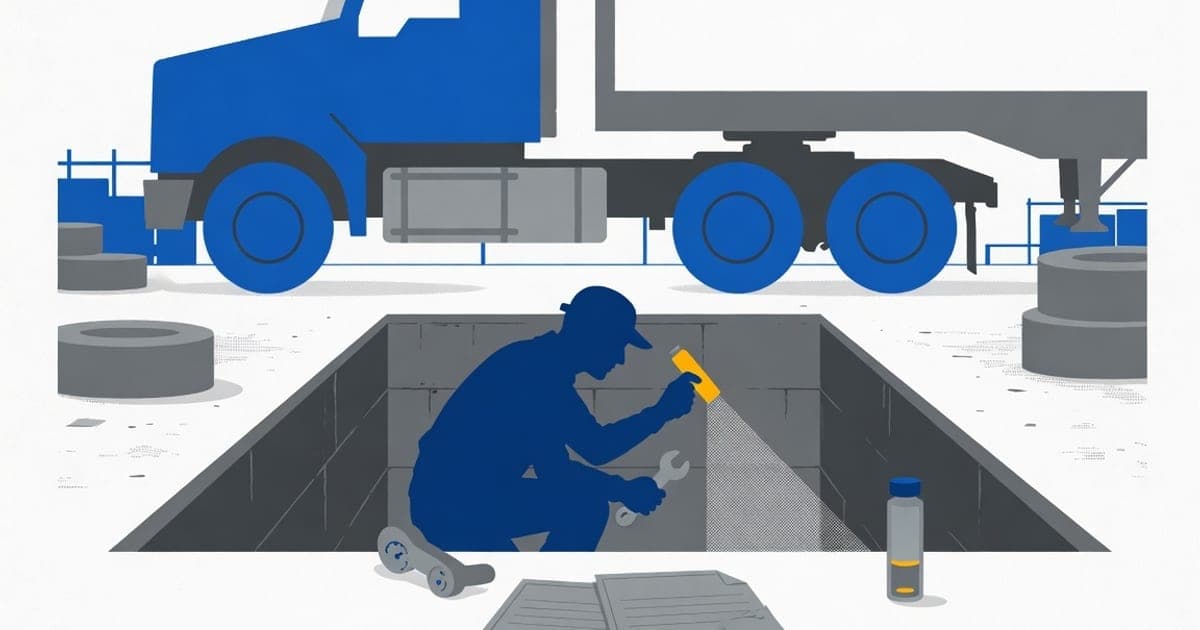
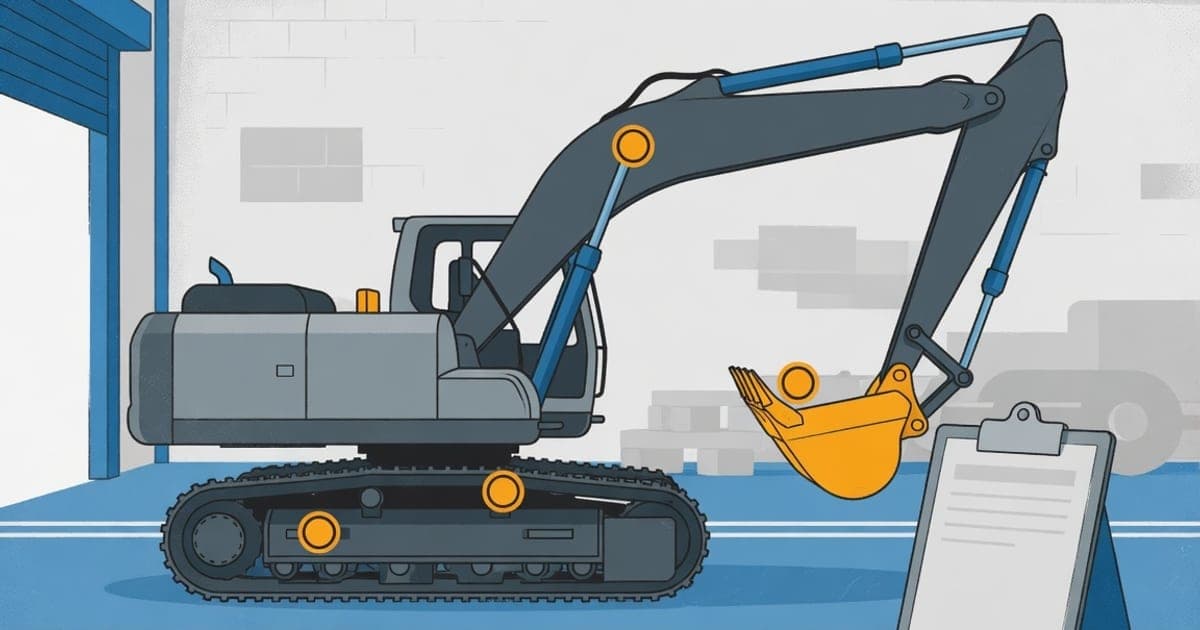
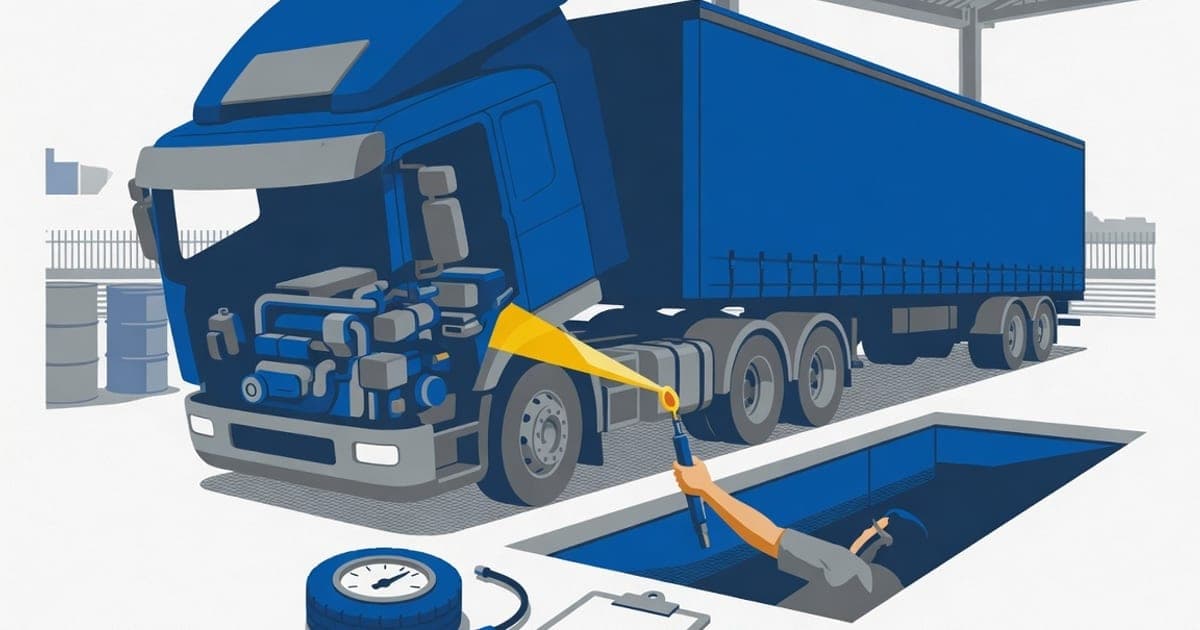
Your eyes on the ground are purchasable almost everywhere. Options in rough order of preference: a marque dealer's field service arm, an independent heavy diesel mechanic in the nearest town, a dedicated pre-purchase inspection service that travels, or at minimum a trusted operator contact in the region. Brief them in writing on what the machine is supposed to be, send them the checklist from our pre-purchase inspection guide, and ask for photos of everything plus oil sample results where the machine warrants it. A few hundred dollars of inspection against a five-figure purchase is the best-priced insurance in this industry. A seller who resists an independent inspection has answered your main question.
The video walkaround: what to ask them to film
The walkaround does not replace the inspection; it decides whether the machine earns one. Ask for one continuous take where possible, phone held steady, narrating as they go.
| Ask them to film | You are looking for |
|---|---|
| Serial and compliance plates, then the whole machine | The machine is the one listed |
| Cold start, from key turn | Smoke colour, cranking time, warnings |
| Idle at the exhaust, then under load | Smoke under load, noises |
| Full function cycle: every ram, slew, gear, PTO | Speed, drift, dead spots |
| Underneath: rails, hangers, leak points | Fresh oil films, wet spots, cracked welds |
| Tyres or undercarriage, close, each position | Remaining life, uneven wear |
| Hour meter and odometer running | Consistency with the listing |
| The faults they know about | Whether the story stays consistent |
Watch it twice, second time with the sound up. Sellers narrate honestly more often than they write honestly.
Getting it home: float, low loader, or drive it
Three ways home, and the right one is decided by mass, dimensions and paperwork rather than preference. Self-driving a truck home requires the correct licence class for that vehicle, current registration or a permit to move, and insurance active from the moment it rolls; the classes are in our licence guide, and none of the three is a detail to sort at the pickup. Machinery travels by float or low loader, and anything over-dimension or over-mass needs access permits, through the NHVR portal in participating states and the state authority elsewhere, with WA in particular running its own system. Permit conditions vary by route and configuration, so let the transport operator, whose accreditation carries the job, own the permit detail rather than taking a blog's word, including this one, for what a corridor allows.
What transport costs, honestly
We are not publishing a rate table, because float pricing is quote-driven and moves with distance, dimensions, mass, route permits and, above everything, backloading: a carrier already repositioning your way can be startlingly cheaper than a dedicated run. The honest method is three quotes against the machine's real dimensions and mass, asked as a backload where timing allows, with permit and pilot costs itemised, before you commit to buy. Distance deals die on freight assumed and survive on freight quoted. For interstate purchases the destination state's registration and inspection steps stack on top; our state by state registration guide and, for the widest gap, the WA buying guide map that layer.
Structuring payment and handover
The principle is the same one that governs local sales, stretched across distance: money and possession move together, in a form that cannot quietly reverse. The workable structures, in increasing order of formality:
- Deposit small and refundable against inspection, balance paid on the day the transport operator collects, with photos at handover. The carrier's collection is your possession event.
- Settlement in person at the machine: you or your agent attend, verify the serial plate one last time, pay by real-time transfer confirmed in-app, and watch it load.
- Escrow-style arrangements, where an agreed third party holds funds until collection is confirmed. These exist as commercial services and as solicitor trust arrangements; verify any service independently, through its own registration and reviews, never through a link the other party sends, and be aware that fake escrow sites are themselves a standing scam pattern. We deliberately endorse no specific provider.
What never works: paying in full, at distance, to a stranger, ahead of any possession event, on the strength of documents they control. Every variation of that sentence is the same deal.
When to walk away
Walk when the seller resists independent inspection, when names do not match across documents and accounts, when the PPSR shows an interest the seller waves off, when the price is priced for urgency, when the story changes between the call and the video, or when your freight quotes turn the bargain marginal. A remote deal has no salvage value in charm or gut feel; the system is all you have, so a deal that fails the system is not your deal. There will be another machine; there is always another machine, and the live listings prove it daily.
And from the other side: if you are the regional seller, everything above is your sales toolkit in reverse. List free, put the serial plate, records and a proper walkaround video in the listing, welcome inspections by name, and you become the seller distant buyers pay full price to, because you have removed every reason to discount you.
PPSR mechanics and access permit administration checked against ppsr.gov.au and nhvr.gov.au on 6 August 2026. Transport permits, licence classes and registration steps vary by state and configuration; confirm with the operator and authority carrying your job before the machine moves.