PPSR Checks for Trucks and Machinery: What They Cover and What They Miss
6 min read
A PPSR search is the cheapest insurance in any used truck or machinery deal: two dollars at ppsr.gov.au, and it tells you whether the vehicle secures someone else's debt, is recorded stolen, or has been written off. The part that surprises buyers, and the reason the check is non-negotiable, is that an encumbered vehicle can be repossessed by the secured lender even after you have paid the seller in full: pay the wrong person and you can lose the truck and the money. The second thing to understand is that machinery is searched differently from road vehicles, by serial number rather than VIN, with real gaps, which is exactly where the risk concentrates. Here is how to run the search properly, read the certificate, and cover what PPSR does not.
What the PPSR is and why it replaced REVS
The Personal Property Securities Register is the Australian Government's national register of security interests in personal property, run through ppsr.gov.au. It replaced REVS and the old state-based encumbrance registers with a single national system: one search covers every state, every lender, every registered interest. When someone finances a truck, floor-plans a dealer's stock, or takes machinery as loan security, they register their interest on the PPSR, and that registration is public. Searching it before you buy is how the law expects you to protect yourself, and in many cases a clean certificate is what preserves your title if a dispute surfaces later.
Searching a road vehicle by VIN
For a registered road vehicle, search by VIN, the 17-character number on the compliance evidence and the registration papers. The search costs $2, per the fee schedule at ppsr.gov.au, and PPSR fees are not subject to GST; you get a certificate by email within minutes. Critical discipline: read the VIN off the truck itself, not just the paperwork, and check they match before you search. A search against the wrong VIN protects you against nothing, and a mismatch between plate, papers and stamping is a walk-away signal in its own right, part of the identity story covered in ADR compliance and the paperwork to demand.
Searching machinery by serial number: the different rules
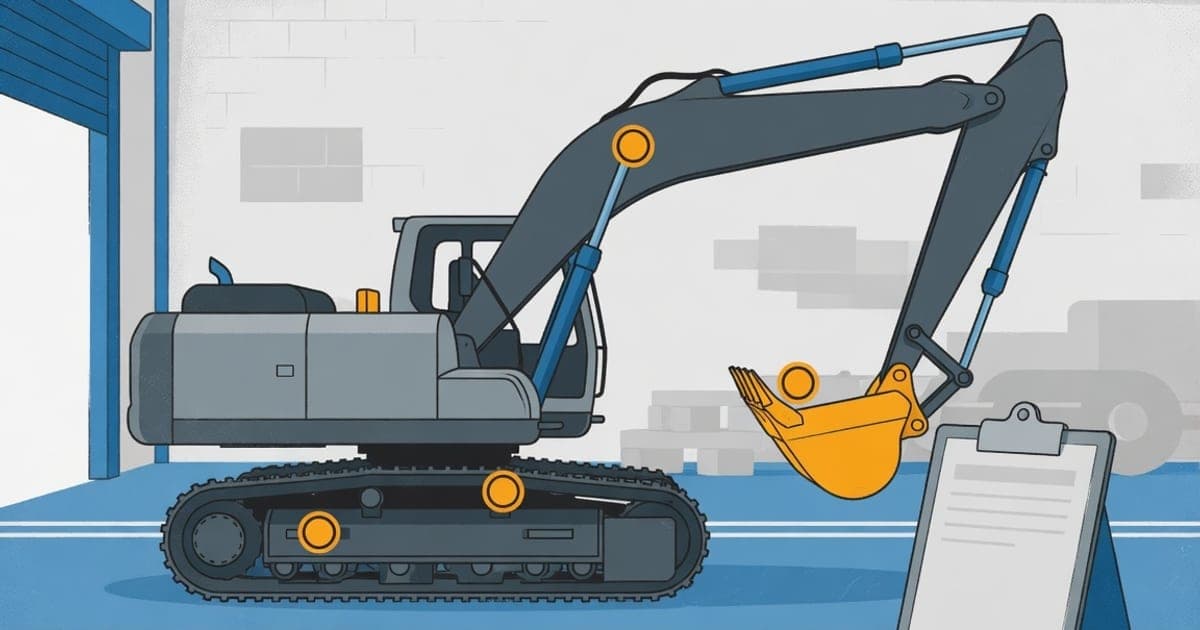
Excavators, loaders, forklifts and most plant have no VIN and often no registration. They are serial-numbered goods, searched on the PPSR by manufacturer's serial number, and three complications follow.
First, the serial must be exactly right: plant serials vary in format between makers and eras, and a mistyped character searches a machine that does not exist. Second, the plate can lie: serial plates on plant are screwed or riveted on and can be swapped or restamped, so match the plate against stampings on the chassis where the maker puts them. Third, and least understood: security interests over machinery are sometimes registered not against the serial number but against the seller as a company, sweeping up all its present and future equipment. A serial search alone can miss that. When you buy plant from a business, search the machine's serial and run a grantor search against the seller's ABN or ACN, and treat a machine covered by a general security over the seller's business as a deal that needs the lender's release in writing before money moves.
Reading the certificate: encumbered, stolen, written off
| Certificate result | What it means | What you do |
|---|---|---|
| Security interest registered | The item secures a debt; the lender's rights can survive your purchase | Get a payout letter and pay the lender directly, or walk |
| Stolen record | Reported stolen to police via state data | Stop. Do not proceed, report the listing |
| Written off | Recorded on a written-off vehicle register | Statutory: never registrable. Repairable: state rules apply |
| Clean certificate | No registrations found against that identifier at that time | Keep the certificate; it is your evidence |
The encumbrance case deserves its own sentence, because it is the whole game: if there is finance owing, the safe path is paying the secured party directly for a release, with the balance to the seller, and never handing the full price to a seller who promises to clear the loan afterwards.
Statutory versus repairable write-offs
A statutory write-off is recorded as damaged beyond safe repair and cannot be re-registered, ever: it is parts. A repairable write-off may, depending on the state, be re-registered after repair plus an identity and safety inspection regime; the rules genuinely vary by state, and state authorities such as Transport WA publish theirs, so check the rules where you intend to register, not where the truck currently sits. One honest caution for heavy buyers: the written-off vehicle registers were built around light vehicles, and how comprehensively heavy vehicles over 4.5 tonnes appear varies, so treat a clean write-off field on a big truck as weaker evidence than it would be on a ute, and lean harder on physical inspection for repair evidence.
What PPSR does not tell you
A clean certificate says nothing about mechanical condition, odometer or hour meter honesty, service history, flood or repair history that never reached a register, or whether the seller is who they claim to be. It does not verify that the machine in the yard matches the serial you searched, only you can do that, and it cannot see a security interest that was never registered. PPSR is one layer. Condition risk is covered by a proper pre-purchase inspection, and seller risk by the fraud patterns in our machinery scams guide.
The resellers charging you more for the same search
Search any rego plate online and you will meet a wall of branded "vehicle history report" sites charging many times the government fee for a repackaged PPSR certificate, sometimes with data you can get free elsewhere stapled on. There is nothing illegal about them, but understand what you are buying: the authoritative document is the PPSR certificate, it costs $2 direct from ppsr.gov.au, and in a dispute the certificate is what matters. Go direct.
A safe buying sequence, in order
- Verify the seller's identity and their right to sell; on plant sold by a business, note the ABN for the grantor search.
- Read VIN or serial off the machine itself and match it to the papers and plates.
- Run the PPSR search against that identifier, plus a grantor search on business sellers, on the day you intend to pay.
- Encumbered: arrange payout to the secured party directly, with a written release. Stolen or statutory write-off: stop.
- Inspect, or commission an inspection, for the condition story PPSR cannot tell.
- Pay traceably, never cash in a car park, keep the certificate with the sale documents.
Run that sequence and the two classic disasters, buying someone else's security and buying a machine that is not the machine, both get caught before money moves. Our safety page covers the payment and meeting side in more depth, and it applies to sellers too: expect serious buyers to run these checks on you, so have your payout figures ready. Then buy and sell in the open: browse current listings with the sequence in your pocket, and when you sell, put the VIN or serial in the listing so buyers can run their own search, then list it free.
Checked against ppsr.gov.au on 6 August 2026, including the $2 search fee, which is not subject to GST. Fees and state write-off rules change; confirm on the PPSR fee page and with your state road authority before relying on this.