What Does a Used Bus Cost in Australia? Minibus to Coach Prices
6 min read
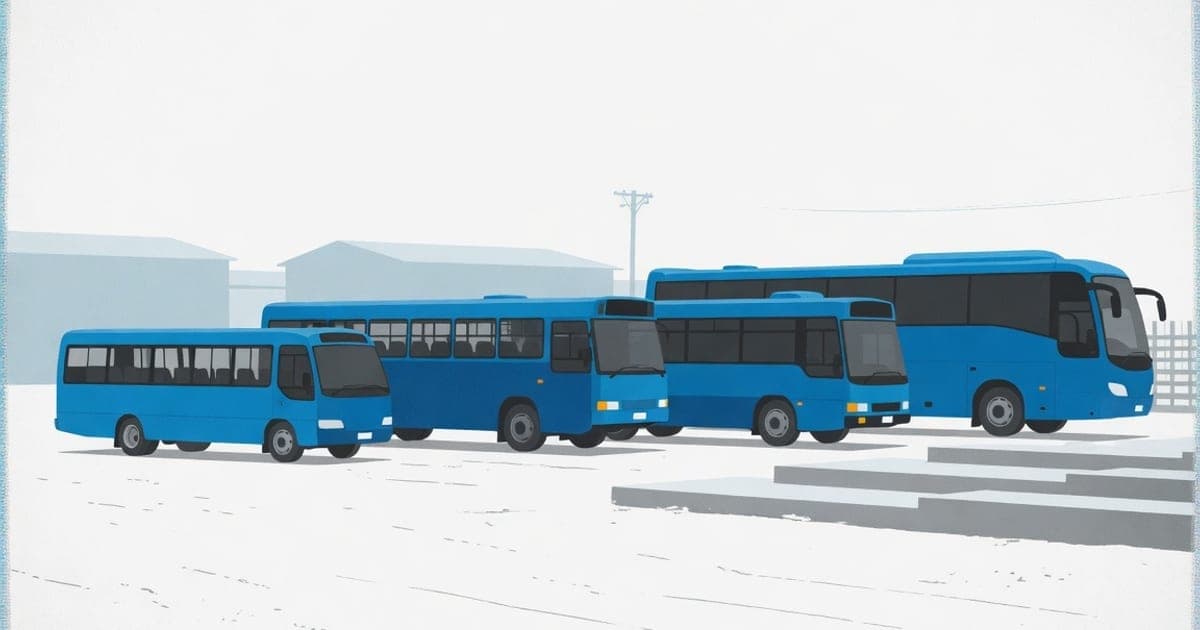
Used bus prices in Australia run from a few thousand dollars for a tired ex-route bus at a surplus auction to well into six figures for a late touring coach, and the spread inside each segment is driven less by age than by compliance: what the bus is certified to do, for whom, and how much life its accreditation-relevant items have left. As a broad observation of asking prices across trucksales.com.au bus listings, Gumtree and government surplus auction catalogues in early August 2026: minibuses commonly ask between the mid teens and around $90,000, ex-route and ex-school buses from a few thousand to around $60,000, and coaches from about $30,000 to $400,000 and beyond. Asking is not selling, sellers registered for GST usually quote ex GST, and the compliance sections below are where the real money hides.
The four segments and who buys each
| Segment | Typical examples | Common asking range, August 2026, usually ex GST | Who buys |
|---|---|---|---|
| Minibus, 12 to 25 seats | Toyota Coaster, Mitsubishi Rosa, HiAce Commuter | Roughly $15,000 to $90,000 | Community groups, tour operators, converters |
| Ex-route bus | Volvo, Scania, MAN city units | Roughly $5,000 to $50,000 | Converters, regional operators, collectors |
| Ex-school bus | Mid-size rigids, BCI, Hino, Fuso | Roughly $10,000 to $60,000 | Regional and community operators, converters |
| Coach | Scania, Volvo, MAN with Coach Design, Volgren, Irizar and similar bodies | Roughly $30,000 to $400,000 plus | Charter and touring operators |
Those bands are asking prices observed on the named sites at the date above, not valuations, and buses move within them on kilometres, driveline, body condition and above all compliance status. Confirm GST treatment on every listing: operator and dealer stock is normally ex GST, private and auction listings vary, and on a $200,000 coach the difference is not a rounding error.
Minibuses and 12 to 25 seaters
The Coaster and Rosa dominate this segment the way the HiLux dominates utes, and for the same reasons: parts everywhere, any diesel mechanic can work on them, and a deep resale market. That liquidity keeps prices firm; a tidy late Coaster holds value startlingly well, and the cheap end of the segment is cheap because of rust, kilometres, or a seating configuration that no longer suits anyone.
Watch the seatbelt question. Older minibuses built without belted seats sit differently under state rules depending on the service they run, and retrofitting belted seating is a certified modification, not an afternoon with a spanner. Price a non-belted bus accordingly.
Ex-route and ex-school buses
Route buses come to market when metropolitan contracts turn fleets over, and they arrive with high kilometres, low speeds, heavy-duty driveline, and interiors built to be hosed out. They are mechanically stout and cosmetically spent, which is why converters love them; our guide to buying a bus for a motorhome conversion is effectively about this segment.
School buses tend to be mid-size rigids from regional contracts, often with genuinely low kilometres for their age but a life of short runs and long idling. Both types surface constantly through government and operator disposal channels, and surplus auctions are where the genuinely cheap buses are; the trade-off is auction condition risk, no test drive, and buyer's premium on the hammer.
Coaches and touring stock
Coach pricing is really the sum of four clocks: engine hours against rebuild, body and lift equipment condition, interior refurbishment cycle, and the compliance items below. A fifteen-year-old coach freshly refurbished and certified can rationally ask more than a younger one that needs seats, a wheelchair lift rebuild and an inspection. The segment's wide range reflects that: you are not buying an age, you are buying remaining certified life.
Specification matters here as well. A coach built for intercity touring differs from a charter unit in tanks, luggage bins and driveline, and repurposing one into the other role costs real money.
What ex-government and ex-operator fleets look like
Fleet disposals are the healthiest part of the used bus market: maintained to schedule by employed mechanics, with records that actually exist, sold because a contract rolled over rather than because something failed. The records are the value. A bus with a stamped maintenance history and inspection reports is worth paying a premium for, because with buses the alternative to records is not optimism, it is a compliance inspection at your expense.
The compliance items that decide value
This is the section that separates bus buying from truck buying. A bus that will carry the public for money sits under a state accreditation regime, and three items move value more than any mechanical one:
- Accreditation and inspection status. Buses used for public passenger services face operator accreditation, vehicle inspection and in some jurisdictions vehicle age requirements, set by each state's passenger transport regulator: Transport for NSW, the Department of Transport and Planning in Victoria, TMR in Queensland, and their counterparts elsewhere. Age and inspection rules differ by state and by service type, so do not carry a number in your head from one state to another; check the regulator for the service you intend to run before you price a bus, because a bus aged out of one use may be fully viable in another.
- Accessibility. The Disability Standards for Accessible Public Transport, a Commonwealth standard under the Disability Discrimination Act, set accessibility requirements for public transport services, and they shape which buses can stay on which work. How the standard applies depends on the service the bus operates, and it does not apply to a private use conversion the way it does to a route service. The scope questions are technical: check the standard and your state regulator rather than assuming either way.
- Seatbelts and seating certification, covered above, which decide school and charter eligibility in several jurisdictions.
A bus priced cheap is usually priced cheap because one of these three has expired or never existed. That can still be a good buy, but only if your intended use does not need it.
Running costs, and where a bus surprises you
Bus running costs surprise truck operators in three places: interiors (forty seats, curtains, air conditioning vents and a wheelchair lift are all maintenance items a tipper does not have), compliance inspections on a schedule you do not control, and parking and storage, because a 12.5 metre coach does not live in a driveway. Fuel and driveline costs track a rigid truck of similar weight closely enough that our running cost guide transfers, with those three additions.
Licensing follows GVM and seating capacity, not the word "bus": most full-size buses need a heavy vehicle licence class, and the steps are in our truck licence classes guide.
Buying and listing
Price against the compliance status you need, not the paint. Verify accreditation-relevant items with the state regulator before paying, run a PPSR search on the VIN, and treat records as a valuation item, not a nice-to-have. Browse current bus and coach listings to calibrate the segment you are in, and if you are the one with a bus coming off a contract, list it free with the inspection history and compliance status stated plainly: the operators buying know exactly what those lines are worth.
Asking price observations above were taken from trucksales.com.au, Gumtree and public surplus auction catalogues in early August 2026 and will drift; accreditation, age and accessibility requirements are state and service specific, so confirm with your state passenger transport regulator before relying on them.