What Does It Cost to Run a Truck Per Kilometre in Australia?
6 min read
Nobody can tell you what your truck costs per kilometre, because the answer depends on your fuel burn, your kilometres, your finance and what you paid for the truck, but anyone can show you how to calculate it, and the method matters more than the number. The honest structure is fixed costs spread over your annual kilometres plus variable costs incurred per kilometre, and the best public Australian primary source for what belongs in the model is the Victorian Government's owner driver rates and costs schedules, published on vic.gov.au under the Owner Drivers and Forestry Contractors Act and updated each financial year. Below is the model, each input and where to get it honestly, and a worked example with every assumption labelled so you can replace them with your own.
Fixed costs versus variable costs
Fixed costs arrive whether the truck moves or not: registration, CTP, insurance, finance payments and depreciation. Variable costs scale with distance: fuel, tyres, servicing and repairs. The split matters because kilometres divide the fixed costs: a truck doing 40,000 kilometres a year carries four times the fixed cost per kilometre of the same truck doing 160,000. That single fact explains most of why a busy linehaul operator and a part-time tipper owner can run identical trucks at wildly different cents per kilometre, and why underworked trucks quietly lose money at rates that look fine on a busy spreadsheet.
Start your model by listing every cost in one column and marking it F or V. The Victorian schedules do exactly this per vehicle configuration, from courier vans to B-doubles, which is why they are worth reading even if you never haul in Victoria: pull the latest year's schedule from vic.gov.au and use its cost categories as your checklist.
Fuel: the biggest variable, estimated honestly
Fuel is usually the largest single line, and the honest way to estimate it is from your own fills: litres purchased divided by kilometres travelled, over months, not from a brochure. Manufacturer consumption claims are produced under conditions your freight task will not reproduce, so never put one into the model as an achieved figure; if you have no history, use a stated assumption and label it as such, then replace it with reality after the first month of fuel dockets.
Two adjustments matter. AdBlue is a real consumable on SCR trucks and belongs in the model. And fuel tax credits can reduce net fuel cost for eligible business use, at rates the ATO publishes and adjusts; for heavy vehicles on public roads the credit is reduced by the road user charge, and eligibility has conditions, so take the current rates and rules from ato.gov.au and check your eligibility rather than assuming it into the model.
Tyres: cost per kilometre by position
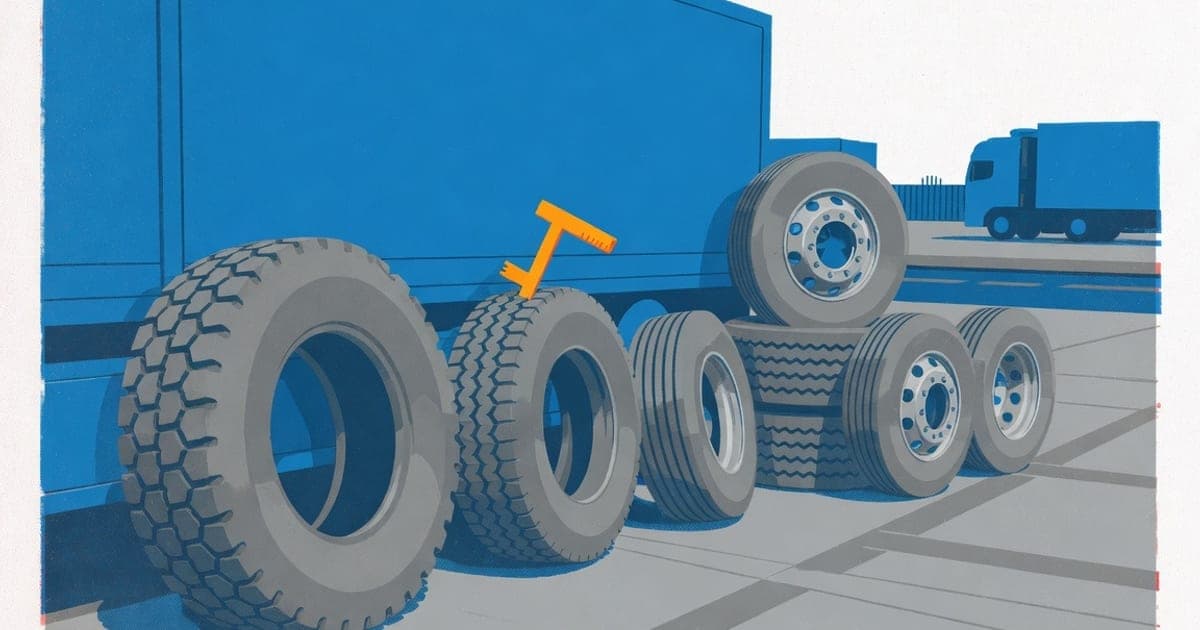
Tyres convert to cents per kilometre cleanly: price per tyre divided by kilometres of life, summed across positions. Steer, drive and trailer positions wear at different rates and carry different rubber, so cost them separately rather than averaging blindly, and build your kilometre lives from your own records because they swing with task, roads and pressures. Sizes, market pricing behaviour and the retread question are covered in truck tyre sizes and cost; for the model, what matters is that you use your prices and your lives, and that trailer rubber gets counted even though it is easy to forget.
Servicing, maintenance and the provision nobody makes
Scheduled servicing is predictable: your intervals, your workshop rates, converted to cents per kilometre. The line that separates honest models from optimistic ones is the unscheduled provision: brakes, clutches, electrical faults, the injector that dies at 700,000 kilometres. Older trucks trade lower fixed costs for higher and lumpier maintenance, which is exactly the trade you should price consciously. Set a per-kilometre provision from your own history, or start from the maintenance allowances in the Victorian schedules for your configuration and correct it against reality each quarter. A model with no repair provision is not conservative, it is fiction.
Registration, CTP and insurance per kilometre
These are annual figures you already pay: current registration and CTP from your renewal, per how heavy vehicle charges work, and your actual premiums, per the insurance stack. Divide by annual kilometres and they take their place in the model. No invention required, just this year's invoices.
Finance and depreciation
Finance interest is a real cost even when the repayment hides it inside principal; use the interest component, not the whole repayment, or you double-count against depreciation. Depreciation is the cost nobody counts: the truck sheds value with every year and every hundred thousand kilometres, and pretending otherwise books a profit you will hand back at trade-in time. The honest method is purchase price minus realistic residual, divided by the kilometres you will own it for. Ground your residual in the used market rather than hope: what comparable units actually list for is visible in guides like what a used prime mover costs and in live listings.
Driver cost if you are not the driver
If someone else drives, their package, wages, superannuation, leave, workers compensation, is the biggest line in the whole model and scales with hours rather than kilometres, which is why slow urban work costs more per kilometre than linehaul at the same wage. If you drive, pay yourself in the model anyway at the wage you could earn driving for someone else; a truck that only profits because the driver works free is not profitable.
A worked example, every input labelled
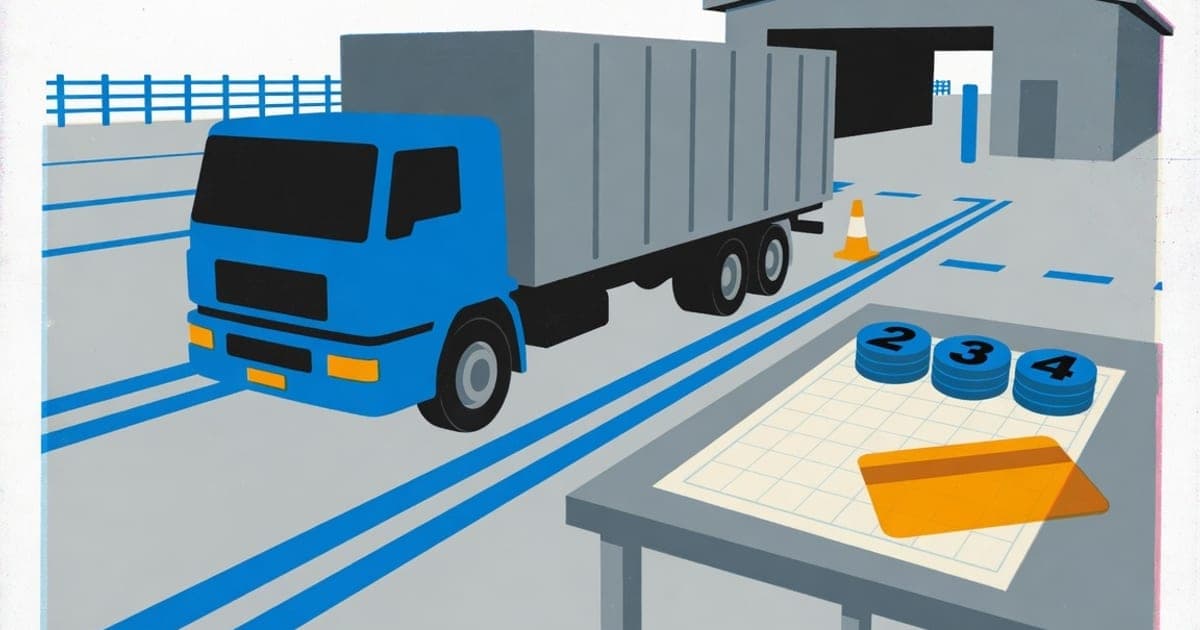
All inputs below are assumptions for arithmetic, not market claims: replace each with your own figures.
| Input | Assumption | Annual cost | Per km |
|---|---|---|---|
| Annual distance | 120,000 km | ||
| Fuel | 50 L/100 km assumed burn at an assumed $2.00 per litre including GST, before any fuel tax credit | $120,000 | 100.0 c |
| Tyres | Assumed 3.5 c/km across all positions | $4,200 | 3.5 c |
| Servicing and repairs provision | Assumed 12 c/km | $14,400 | 12.0 c |
| Rego and CTP | Assumed $8,000 | $8,000 | 6.7 c |
| Insurance | Assumed $12,000 | $12,000 | 10.0 c |
| Finance interest | Assumed $9,000 | $9,000 | 7.5 c |
| Depreciation | Assumed $30,000 per year | $30,000 | 25.0 c |
| Total before driver | $197,600 | 164.7 c |
The shape of the result is the lesson, not the number: depreciation and fuel dominate, and every line moves if your inputs differ, which they will. Note GST treatment when you populate it: registered businesses generally model costs ex GST because GST is recovered, so keep the whole column consistent one way or the other.
Sanity checking your model
Cross-check your finished figure three ways. Against the Victorian owner driver schedules for your configuration and the current year, which exist precisely so hirers and drivers negotiate from published cost models. Against your accountant's numbers for the last full year, total spend divided by total kilometres, which catches forgotten lines instantly. And against the rate you are being offered for work: if the rate is below your honest cents per kilometre plus margin, the job loses money at any volume. If the model says the truck you own is wrong for the task, the market is the fix: browse trucks for the configuration the arithmetic actually wants, and list the current truck with its service history documented, because a truck with proven costs is worth more to the next operator than an identical mystery.
Checked against Victorian Government owner driver schedule publication practice and ATO fuel tax credit guidance on 6 August 2026. Rates, charges and credit rates change; pull the current year's figures from vic.gov.au, ato.gov.au and your own invoices before relying on any output of this model.