Truck Gearbox and Diff Interchange: What Actually Bolts Up
7 min read
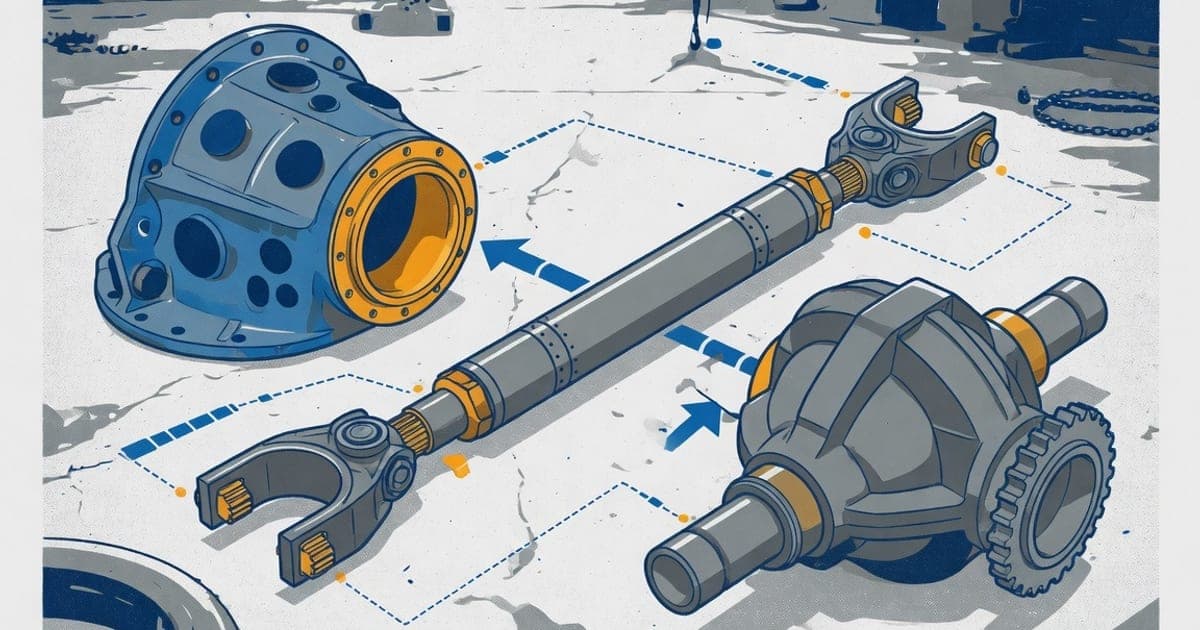
"It is a Roadranger, it will fit" is the most expensive sentence in the used driveline market. Whether a gearbox or diff actually bolts into your truck comes down to a short list of measurable interfaces: housing pattern, input spline and clutch, output yoke and tailshaft, mounts, and on anything modern, the electronics wrapped around the metal. Every one of those is checkable before money moves, with a tape, a phone camera and the right questions. This guide is the checklist, written to be used at a wrecker's rack, because the freight both ways on a wrong gearbox usually costs more than the measuring would have.
Why "it is a Roadranger" is not a fitment answer
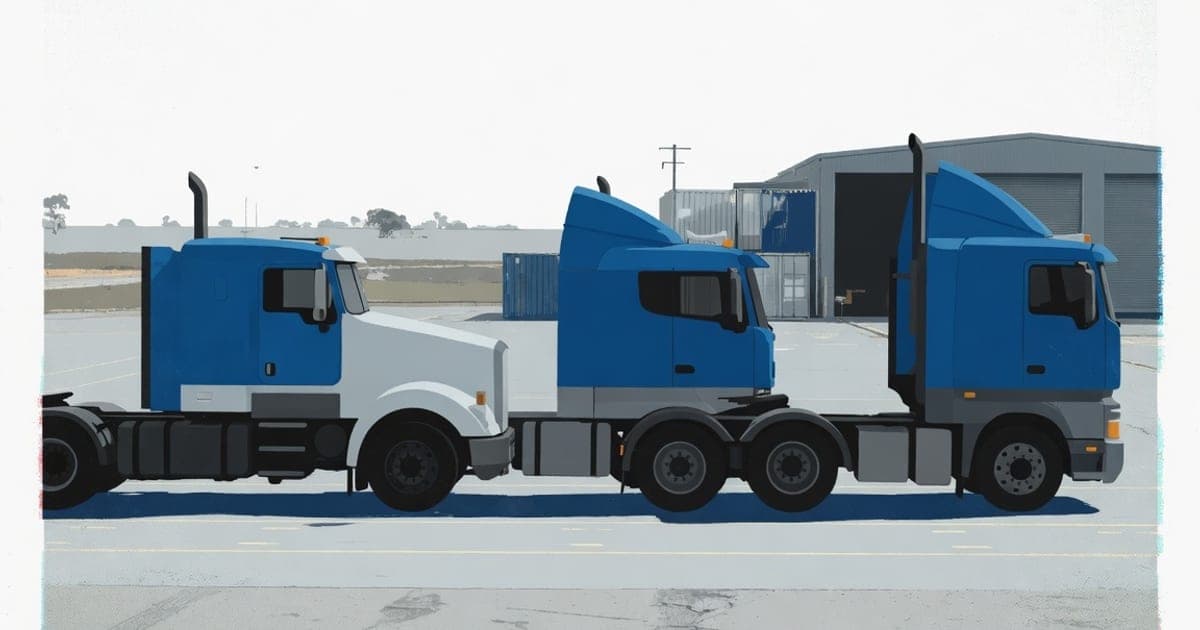
Eaton's Roadranger family spans decades of models, and the code on the tag is the actual identity: an RT, RTX, RTLO or similar prefix, a nominal torque rating and a speed count, each variant with its own ratio set, input shaft options, PTO apertures and housing details. Two boxes that are both "18 speed Roadrangers" can differ in input shaft diameter, overall length, yoke series and top gear (overdrive versus direct), and any one of those differences is enough to strand a truck in the shed. The same is true across Meritor, ZF, Spicer and the Japanese driveline families. The tag, photographed and decoded, is where every interchange conversation starts; a seller who cannot photograph the tag is selling you a guess.
The five things that decide whether a gearbox fits
- Flywheel housing pattern and size. Heavy engine and gearbox faces follow the SAE flywheel housing standard sizes (SAE 3 up through SAE 1 and beyond), and most heavy truck engines carry SAE 1, but "most" is not "yours": confirm the housing size and bolt pattern on both sides before anything else.
- Input shaft and clutch. Diameter, spline count and length must match the clutch, and the clutch must match the flywheel. Roadranger input shafts exist in more than one diameter, commonly quoted as 1.75 inch and 2 inch types, and wrecker staff and printed charts genuinely disagree about which models got which over the years, so measure the shaft and match the clutch to the measurement, never to a chart, ours included. Non-synchro boxes also use a clutch brake actuated at the pedal's last inch; the clutch brake, linkage and shaft length all have to agree.
- Length, mounts and crossmember. Overall box length, mount positions and the crossmember must land where the chassis expects, or you are fabricating, which is possible and never free.
- Output yoke and speedo provision. The output spline and yoke series must suit your tailshaft (or you change yokes or shafts), and the speedo drive, mechanical or electronic, must suit your dash.
- Controls and electronics. Shift tower position and linkage on manuals, and on anything automated the full harness, control modules and software story below.
PTO apertures deserve their own mention for tippers and vocational trucks: if your truck runs a PTO, confirm the replacement box carries the right aperture in the right position, because "fits but no PTO mount" is a fitment failure discovered at the worst time.
Bellhousing and clutch: where cheap swaps die
The housing face is standardised; what bolts to the crank is not. Flywheels, clutches, and the pilot and release arrangements vary by engine and by clutch model, and a gearbox swap frequently becomes a clutch decision: reusing a worn clutch against a fresh input shaft is false economy, and a new clutch has to match flywheel, shaft and clutch brake in one coherent set. Price the clutch, flywheel machining and clutch brake into every gearbox swap from the start. If the engine side of the equation is also in question, the engine-family politics that decide what housings and mounts you inherit are covered in the X15, DD15 and D13 comparison.
Output, tailshaft length and driveline angles
Behind the box, three things move: yoke series, shaft length and geometry. A replacement box an inch longer or shorter than the original means shortening or lengthening the tailshaft, which is routine driveline shop work but must be balanced, not backyard welded. Universal joint series must match at both ends or yokes get changed. And driveline operating angles have to stay within tolerance after any change of box length or mount height, because wrong angles show up later as vibration and short universal joint life. None of this stops a swap; all of it belongs on the quote.
Diff swaps: ratio, spline, housing and matching a tandem set
Diff interchange runs the same discipline with its own checklist:
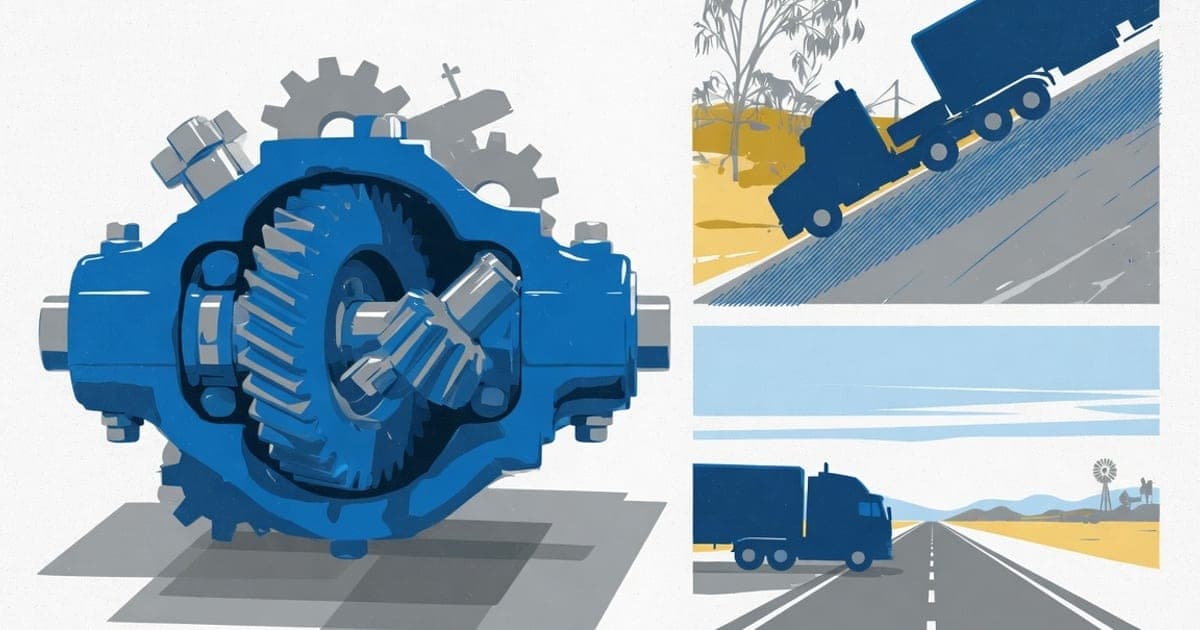
- Ratio. The headline number, stamped or tagged on the carrier, and on a tandem drive truck both axles must carry the same ratio because the power divider ties them together; how ratios are read, verified and chosen is covered in the diff ratio guide.
- Carrier pattern and housing. A changeover carrier must match the housing's bolt pattern and family; a complete axle swap must match spring seats, track width and brake gear.
- Axle shaft splines. Carrier side gears must match your axle shafts' spline count and diameter; measure both.
- Brakes and wheel ends. Drum against disc, camshaft lengths, slack adjusters, hub types and ABS sensor provisions all ride along with a complete axle.
- Locks and extras. Cross locks, power divider condition and any diff lock wiring or air lines need to match what your truck expects.
Where a printed interchange chart says one thing and the parts in front of you say another, believe the parts. Where two references disagree, and in this market they do, the answer is a tape measure and a tooth count, not a coin toss.
Electronics: why a modern gearbox is not a mechanical swap
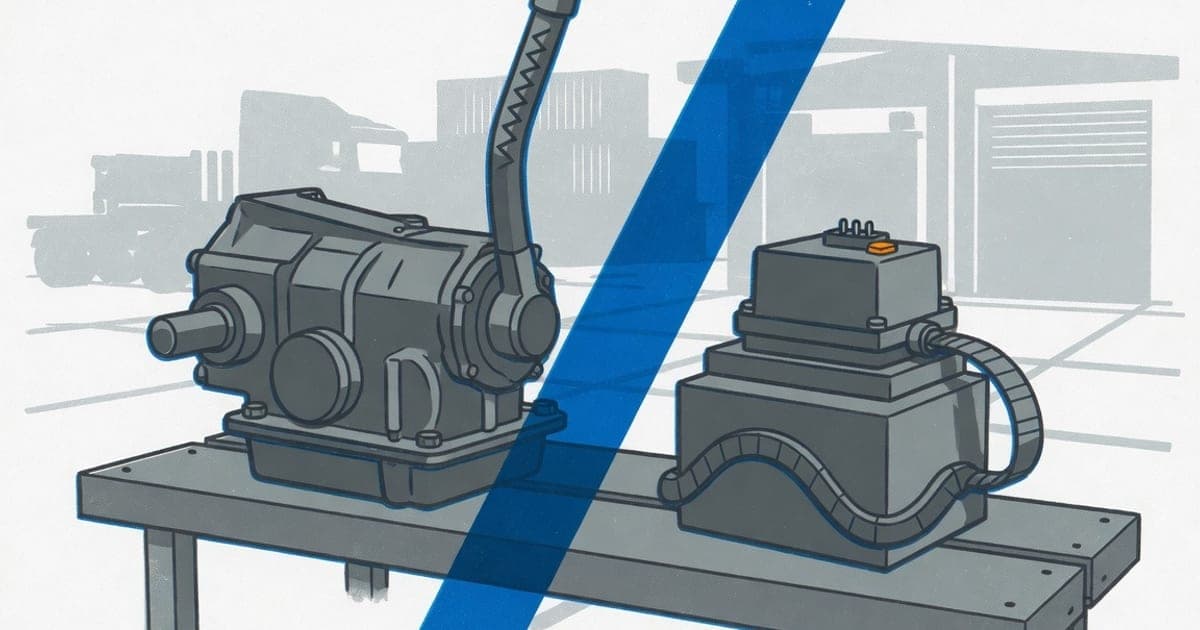
On late-model trucks the gearbox is a networked computer that happens to contain gears. Automated boxes, I-Shift, mDRIVE, DT12, UltraShift and friends, and modern engine-integrated manuals expect specific control modules, harnesses and software calibrations matched to the engine, dash and chassis. A mechanically identical unit from a different build can refuse to work, or half-work, until programmed, and programming access commonly means the dealer network. State it as the constraint it is: swapping an electronically controlled transmission or diff-related module is a mechanical job plus an integration job, and the integration side needs a named plan (who programs it, at what cost) before you buy the metal, not after. This is the same integration trade-off that shapes the Roadranger versus AMT decision in the first place.
Questions to ask a wrecker before you pay
This table is the post: send it with the enquiry and keep the answers with the invoice.
| Ask | Why it protects you |
|---|---|
| Photo of the ID tag (gearbox) or carrier stamp and tag (diff) | The tag is the identity; everything decodes from it |
| Donor truck make, model, engine and year | Cross-checks the tag and reveals the electronics story |
| Input shaft diameter and spline count, measured | The chart-proof fitment fact on gearboxes |
| Overall length and mount positions, or your model confirmed same | Saves a fabrication surprise |
| Output yoke series and speedo type | Tailshaft and dash compatibility |
| PTO apertures, positions and condition | Vocational deal-breaker hiding in plain sight |
| Ratio, and both-axle availability for tandems | Tandem sets must match; singles strand you |
| Oil condition and any metal, drained in front of camera | The cheapest internal inspection that exists |
| Test-run or inspection video, warranty terms in writing | "Ran when pulled" is not a warranty |
| Freight cost, method and insurance to your postcode | Heavy driveline freight is a real line on the total |
On that last line: gearboxes and diff centres are dense, awkward freight, and the delivered price is the only price that matters. Run the numbers with the parts shipping calculator before you commit, because a bargain three states away can stop being one on the pallet.
Buying the metal without getting burnt
The generic secondhand-parts discipline applies in full here, and the long version lives in buying used truck parts without getting burnt: verify the seller, verify the part's identity from tags not descriptions, get the return terms in writing, and pay by traceable means. Driveline parts add one more rule: buy the story. A gearbox from a rolled truck with 200,000 km and a photographed tag is a purchase; a steam-cleaned mystery box "off a Kenworth" is a bet. Browse current stock with tags visible in the truck and trailer parts listings, and if you have a driveline taking up floor space, list it free with the tag photo, measured input specs and donor truck details in the first lines, because that is exactly the listing this post has just taught a few thousand buyers to search for.
Interchange specifics in this post are deliberately framed as what to measure rather than model-pair claims; where a specific interchange matters to you, verify it against the manufacturer's or a parts catalogue's documentation for both units, and measure the physical parts before paying.