Buying Used Truck and Machinery Parts Without Getting Burnt
6 min read
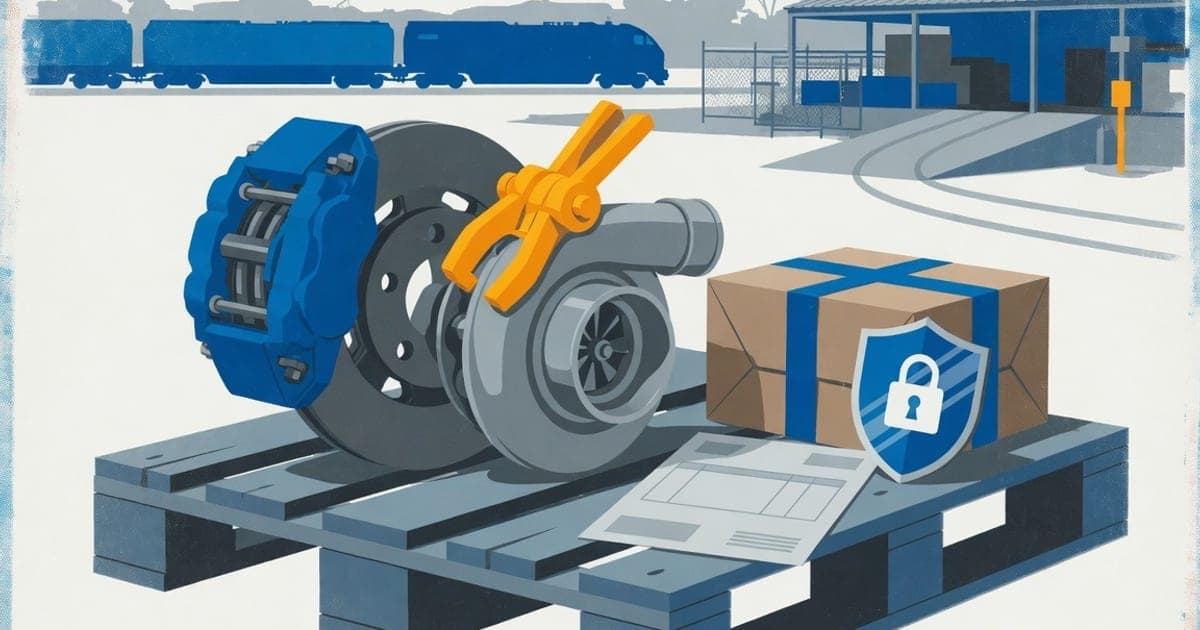
Most used-parts disasters are identification failures, not fraud. The seller had a real part, the buyer had a real need, and the two were never the same component: wrong ratio, wrong series, superseded number, wrong side. You prevent almost all of it before you shop, by identifying exactly what you need from your own machine, and you prevent the rest with photo requests, written return terms, freight discipline and payment that leaves a trail. This guide is that sequence, in order.
Identify before you shop
Get the number off your own part first, or failing that, the full identity of your own machine: VIN or serial number, engine code, transmission code, diff ratio from the axle tag. With that, a dealer parts desk or manufacturer catalogue can give you the current part number, and every conversation you have afterwards is anchored to it. Shopping first and identifying later runs the process backwards: you end up trying to make a listing fit your truck, which is how a "should suit" part gets bought.
If the old part's number is unreadable, photograph the part in place from several angles, including mounting points and connectors. Sellers and wreckers match on photos surprisingly well; our truck wreckers guide covers how to phrase the request so a yard can actually fill it.
Part numbers, supersessions and casting marks
Two correct people can hold two different numbers for the same part. Manufacturers supersede part numbers when a component is revised, and the old and new numbers often interchange. So a seller quoting a number that differs from yours is not automatically wrong, and a matching number is not automatically right if the supersession went the other way and the new part does not back-fit. The arbiter is the manufacturer catalogue or dealer parts desk, which holds the supersession chain. Two minutes on the phone beats freight both ways.
Casting numbers are the trap inside this. The number cast into a housing, manifold or bracket identifies the casting, not the finished part: one casting can become several different machined parts. Use casting marks to narrow a match when nothing else is legible, not to confirm one.
Photos to request before paying
Ask for these before money moves, and keep the listing and the message thread until well after the part is fitted and proven. If a dispute comes, the thread is your evidence of what was described.
| Photo | What it proves |
|---|---|
| The part number or data tag, legible | It is the component claimed |
| The whole part, all sides | Nothing is missing or cut off |
| Mating faces and mounting points | It has not been hacked off a donor |
| Splines, flanges, connectors up close | Wear and damage in the places that matter |
| Any known damage | The defect is the one described, no worse |
| The part packed or palletised | Condition at handover, for the freight claim |
A seller who will not photograph the number is a seller you do not pay. There is no innocent version of that refusal.
Parts you should never buy used
Safety-critical components are the hard line. Brake components, steering components, suspension components, lifting gear and load restraint equipment do their job in the exact moment a failure is unsurvivable, and a used one arrives with no history you can verify. Lifting equipment in particular sits inside a work health and safety inspection and certification regime: chains, hooks, slings and lifting points are inspection-tagged items, and your state WHS regulator (WorkSafe or SafeWork in each state) publishes the plant and lifting equipment requirements that apply. Buying such items second-hand without current certification and inspection records puts the buyer's WHS duties in play, not just the seller's. If it stops, steers, restrains or lifts, buy it new or certified, and keep the paperwork.
The same logic applies at lower stakes to seatbelts, airbag components and tyres of unknown age: cheap to buy used, ruinous when they fail, impossible to verify by looking.
Reconditioned and exchange units: the middle path
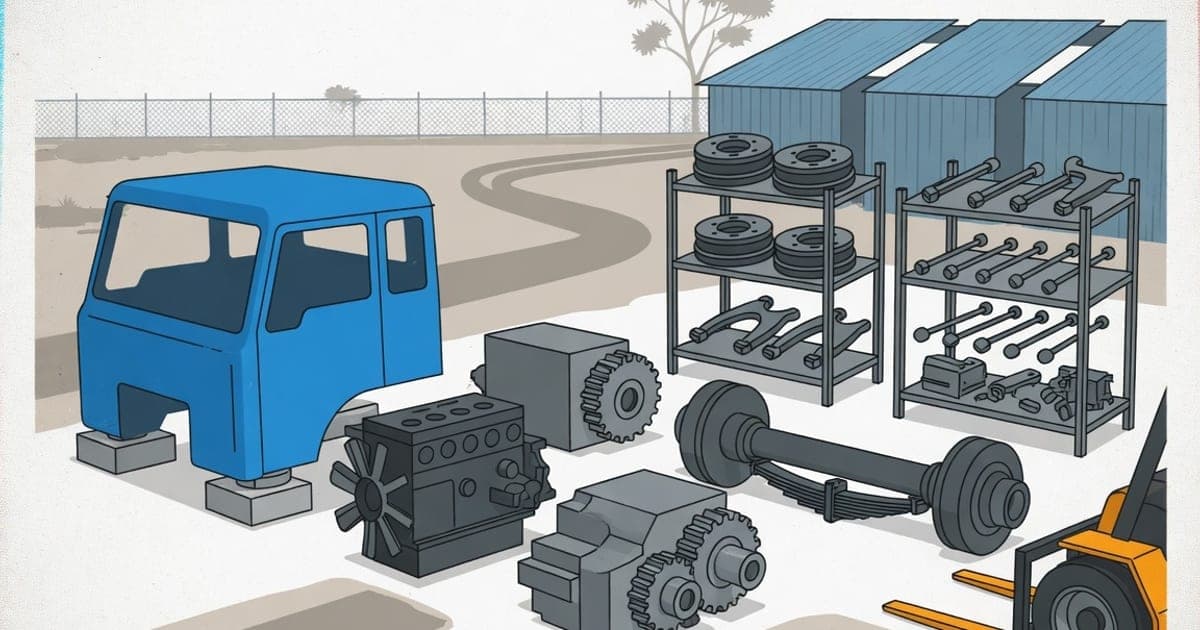
Between a raw used part and a new one sits the reconditioned or exchange unit: a core rebuilt to a stated specification, sold with a warranty, usually against return of your old core. For engines, gearboxes, steering boxes, turbos and injectors, this is often the rational buy, because the invisible internals are exactly what the reconditioner has renewed and warranted.
The questions that separate a real reconditioner from a cleaner of parts: what was replaced as a matter of course, what was measured and against what specification, what does the warranty cover including labour, and what is the core charge if your old unit is not rebuildable. A one-page rebuild sheet answers all four. "Fully reconditioned" on an invoice with no sheet behind it answers none.
Freight, pallets and damage in transit
Heavy parts move on pallets, and pallets get forklifted, restacked and rained on. Three disciplines cover you. First, price the freight before you commit to the part, because on heavy items the freight leg can rival the part price; our parts shipping calculator does that with the packed weight and dimensions the seller gives you. Second, insist the part is packed to survive: strapped, not shrink-wrapped and hoped for, with machined faces protected. Third, photograph the pallet on arrival before you sign the proof of delivery, and note visible damage on the POD itself. Freight damage claims are winnable with arrival photos against the seller's packing photos, and nearly unwinnable without them.
Depot-to-depot beats residential delivery on cost, and it usually beats it on handling too, because there are fewer lifts in the chain.
Payment and what recourse you actually have
Match the payment method to the seller and the stakes. Paying a trading business with an ABN, a landline and a yard address by bank transfer against a proper invoice is normal commerce, and the invoice is your recourse document. Paying a stranger's PayID from a marketplace chat for a $4,000 gearbox is a different act entirely: bank transfers to strangers are effectively irreversible, and recovery rates on payment-redirection and false-listing scams are poor. Card payments and PayPal goods-and-services carry dispute mechanisms; sellers who demand friends-and-family or gift cards are not sellers. The patterns are catalogued in our heavy machinery scams guide and our safety page covers marketplace-specific practice.
Where the seller is a business, Australian Consumer Law guarantees can apply to the sale; the ACCC (accc.gov.au) explains when. Treat that as the backstop, not the plan. The plan is written terms, evidence photos and a payment trail.
For four-figure and up purchases from private sellers at distance, treat it like buying a machine remotely: verify identity, verify the part exists with a timestamped photo, and consider inspecting or using an agent. Our remote buying playbook covers the full method.
Buying from operators rather than resellers
The best used parts often come from other operators: the spare bought and never fitted, the takeoff parts from an upgrade, the attachment that no longer fits anything in the fleet. Provenance is one owner deep, the story is checkable, and the price reflects shelf-clearing rather than margin.
That is the trade the parts categories here exist for. Browse truck and trailer parts and machinery parts and attachments with part numbers and donor details in the listings, and when you are the one with the shelf, list the part free with the number, the donor machine and the six photos above already done. The buyer who has read this guide is exactly the buyer you want: they arrive with a number, they pay properly, and they do not come back with surprises.