Truck Insurance and CTP in Australia: What You Actually Need
5 min read
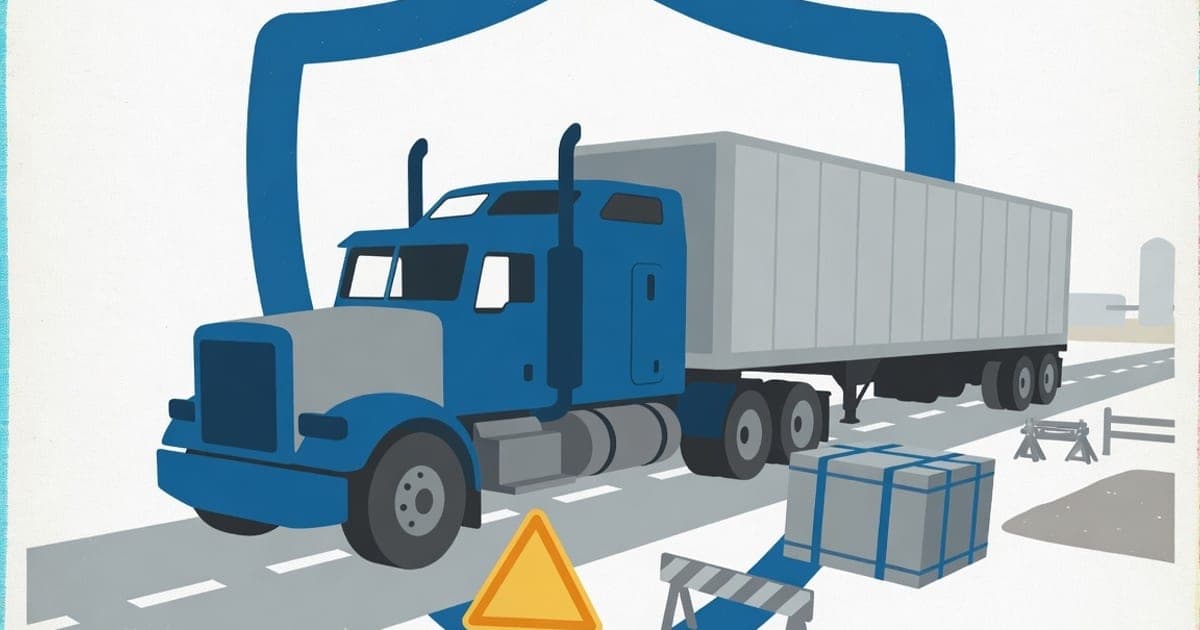
The insurance stack for an Australian truck has four layers, and the first one is compulsory: CTP, which covers personal injury to people, and nothing else. On top of that sit cover for the truck itself, third party property or comprehensive, cover for the freight, goods in transit, and cover for the business, public liability and the add-ons like downtime. The most expensive misunderstanding in the industry is assuming CTP or rego somehow covers damage to your truck or someone's Mercedes: it does not, anywhere, in any state. The second most expensive is taking delivery before cover starts. Here is the stack, layer by layer, and what actually moves the premium.
CTP: compulsory, state based, injury only
Compulsory third party insurance exists in every state and territory, but as eight separate schemes with different names, regulators and pricing. In NSW it is the green slip, regulated by SIRA and bought from competing insurers. In Victoria the TAC charge is collected with registration. Queensland's scheme is overseen by the Motor Accident Insurance Commission with a choice of licensed insurers. South Australia has its CTP scheme with allocated insurers, Western Australia's cover is arranged through the Insurance Commission of WA with registration, Tasmania's through the MAIB, the Northern Territory's through its motor accidents compensation scheme, and the ACT runs its motor accident injuries scheme. Same idea everywhere, personal injury arising from motor accidents, delivered eight different ways, so the scheme regulator in your state is the reference for what is covered and what it costs.
Say the limitation plainly: CTP covers people, not property. Not the other driver's car, not the load, not the guardrail, not your truck. Everything below CTP in this post exists because of that line. Where CTP sits inside the registration bill, and why it varies so much by state, is covered in truck registration costs.
Third party property versus comprehensive
Third party property damage cover pays for the damage your truck does to other people's property. Given that a loaded truck can total several cars, or worse, a bridge, in one bad moment, operating without at least TPP is betting the business every day. Comprehensive adds your own truck to the cover, accident, fire, theft, and for most operators with six-figure vehicles or finance, the lender will insist anyway. On older, cheaper trucks the TPP-versus-comprehensive call is genuine arithmetic: truck value against premium and excess. Agreed value versus market value matters more in trucks than cars, because specialised gear, cranes, tippers, sleeper fit-outs, is exactly what a generic market valuation misses.
Goods in transit and carriers liability
The truck policy does not cover the freight. If you carry goods for reward, you need goods in transit or carriers liability cover, and the difference matters: goods in transit generally covers damage to the cargo from listed events, while carriers liability responds to your legal liability to the freight owner. Contracts complicate this further, because consignment terms often try to shift risk. If you carry under standard industry terms, get the policy matched to the contracts you actually sign, not to a generic description of cartage. Refrigerated work adds deterioration risk, which is its own extension. This is specialist broker territory and one of the few places in trucking where paying for advice is reliably cheaper than the first uncovered claim.
Public and products liability
Public liability covers injury and property damage arising from your business operations beyond the driving itself, loading, unloading, site work, and many customers and sites will not let you through the gate without a certificate of currency at a stated limit. If your operation also supplies or installs anything, products liability rides alongside. For owner-operators this is often bundled; for anyone working construction sites, mines or major DCs, the required limits come from the customer's contract, so read it before renewing.
Downtime, loss of income and hire cover
When the truck is in the panel shop for eight weeks, the payments and the driver do not pause. Downtime or loss-of-income cover, and hire vehicle cover, exist to bridge exactly that gap, and for a single-truck operation the case is stronger than for a fleet that can absorb a unit off the road. Read waiting periods and caps carefully: cover that starts after a fortnight and stops after four weeks covers less than the brochure suggests.
What drives a heavy vehicle premium
Insurers price trucks on the risk you present, and the levers are consistent even though every insurer weights them differently: vehicle type and value, what you carry, radius of operation, the routes and regions you run, driver ages and records, claims history, security and parking, and excess levels. We are deliberately not publishing premium figures, because they vary too much across those levers for any number to be honest. What you can control is the story you present: named experienced drivers, documented maintenance, telematics, secure yards and a clean claims run all pull premiums down over time, and the per-kilometre effect of insurance on your costs is part of the model in running cost per kilometre.
One risk you control completely: operating lawfully. Policies carry conditions, and operating unlicensed for the class, or running a vehicle that is not compliant, an unroadworthy truck, or one with a tampered emissions system, is the kind of breach that gives an insurer room to walk away from a claim exactly when you need it most. The licence classes are set out in our licence class guide, and the 4.5 tonne car-licence boundary that catches out light truck operators in the 4500 kg GVM guide.
Owner driver versus fleet
An owner driver buys retail: one truck, one policy, premium priced on one driver's record, and the downtime question is existential. A fleet buys a program: burning-cost pricing on its own claims experience, higher excesses carried deliberately, sometimes self-insured layers. The practical advice diverges too. Owner drivers should broker the whole stack together, truck, transit, liability, downtime, because gaps between separately bought policies are where claims fall through. Fleets should manage claims data as an asset, because it literally prices next year's program.
Getting cover sorted before you take delivery
The sequence that avoids the classic disaster: get quotes while you are still negotiating the purchase, confirm the insurer will cover the exact vehicle and use, and have cover incepted from the moment risk passes to you, which is usually payment, not registration day. Driving a just-purchased uninsured truck home is carrying its full value on one trip. When you are comparing candidate trucks, the insurance quote is genuinely part of the price of each, so ask for it per vehicle, then browse trucks for sale with that line in the spreadsheet. And when you sell, a documented maintenance and claims history makes your truck cheaper for the next owner to insure, which is a selling point worth stating when you list it free.
Checked against state scheme regulator guidance on 6 August 2026. CTP schemes and insurance products change and vary by state; confirm the current position with your scheme regulator and read your own policy wording before relying on this.