Truck Diff Ratios Explained: Picking the Right Final Drive for the Work
7 min read
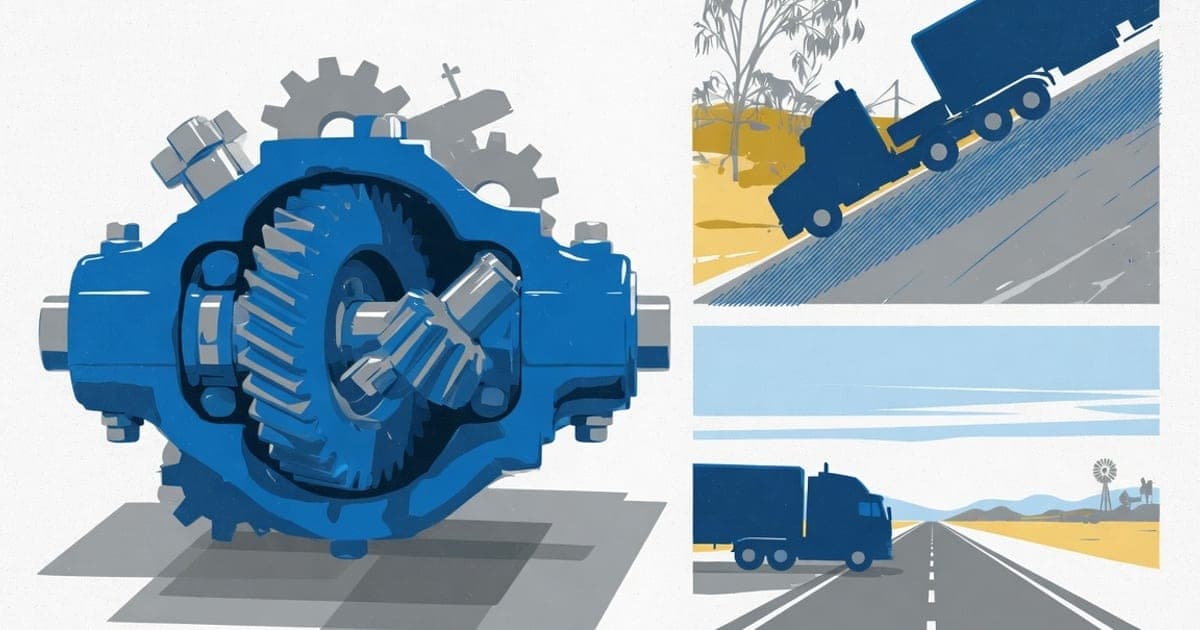
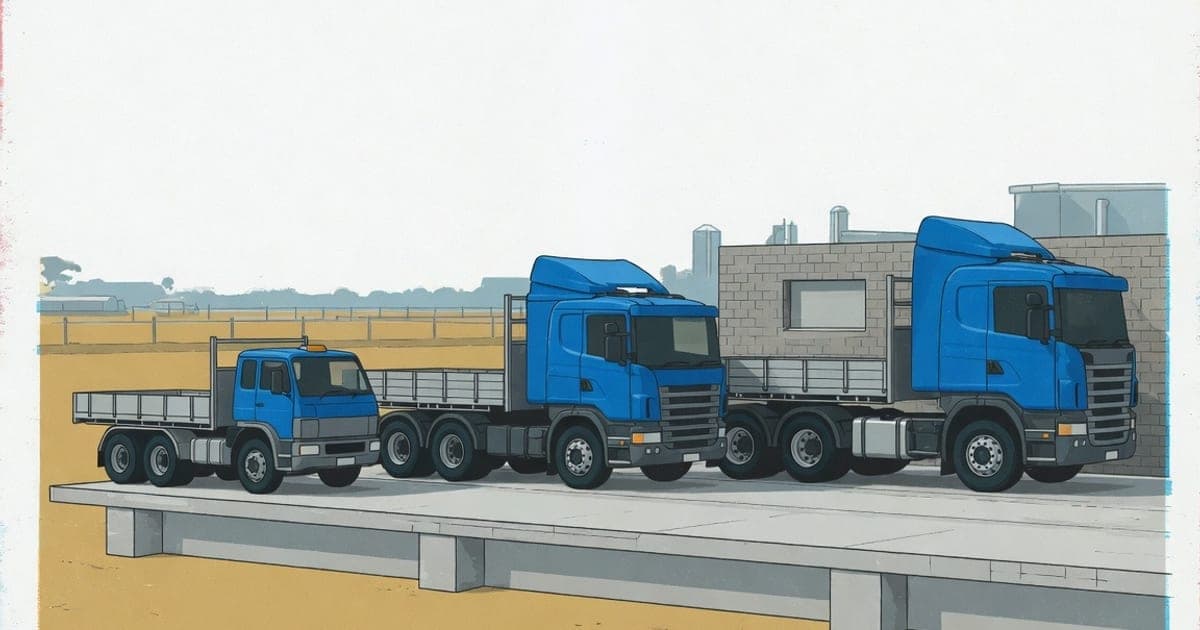
A diff ratio is the last gear multiplication between the engine and the road, and it decides what the truck is actually built to do more than most of the badges on the door. The same prime mover with 4.3 diffs is a tipper and roadtrain workhorse, and with 3.5 diffs a fuel-efficient single trailer highway truck, and putting either one on the other truck's job costs money every single day it runs. This guide explains what the ratio changes, how to match it to gearbox and tyres, how to identify what is in a truck before you buy it, and what changing it involves when the truck you love has the diffs you do not.
What a diff ratio is and what it changes
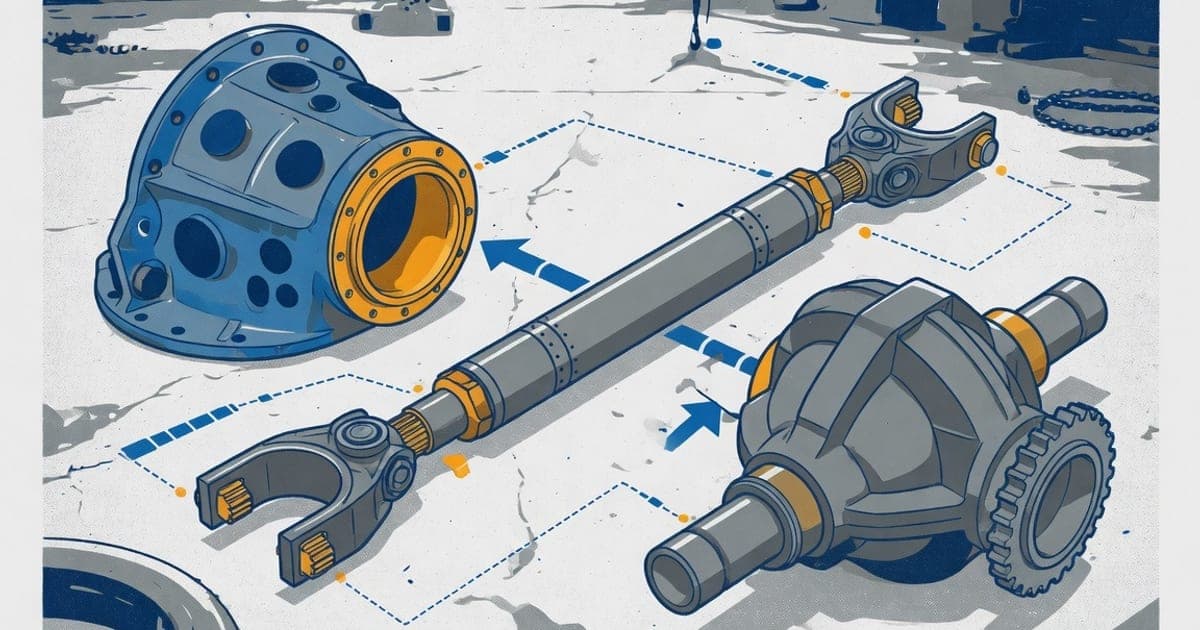
The ratio is how many times the tailshaft turns for one turn of the wheels: 4.11 diffs mean 4.11 driveline revolutions per wheel revolution. It is set by the tooth counts of the crown wheel and pinion, which is why the ratio is often written as a tooth pair in parts language. Every torque the engine makes is multiplied by the gearbox ratio and then by the diff ratio on its way to the tyre, so the diff sets the permanent trade between pulling power and road speed for every gear at once. Change the ratio and you have changed the truck's personality: where it cruises, what it can start on a grade, what it burns, and how long the driveline lives.
Numerically high versus low: torque against road speed
The language trips people, so anchor it: a numerically higher ratio (4.6, 5.3) is "lower" gearing, more multiplication, more wheel torque, less road speed per engine rev. A numerically lower ratio (3.2, 3.6) is "taller" gearing: fewer revs at highway speed, better fuel economy, weaker take-off and hill pulling.
Run either direction too far and the truck complains. Too tall for the work and the engine lugs below its torque band, the clutch works harder on every start, drivers hold lower gears longer, and fuel economy gets worse, not better, because the engine is out of its efficient band. Too short and the engine spins fast at cruise, burning fuel and hours for nothing. The right ratio parks the engine in the manufacturer's stated economy band at your typical loaded cruise speed. That band is on the engine's spec sheet; the arithmetic to hit it is below.
The arithmetic: do your own sum
Engine revs at road speed are pure arithmetic, no folklore required:
Engine rpm = tyre revolutions per kilometre x speed (km/h) / 60 x gearbox top gear ratio x diff ratio
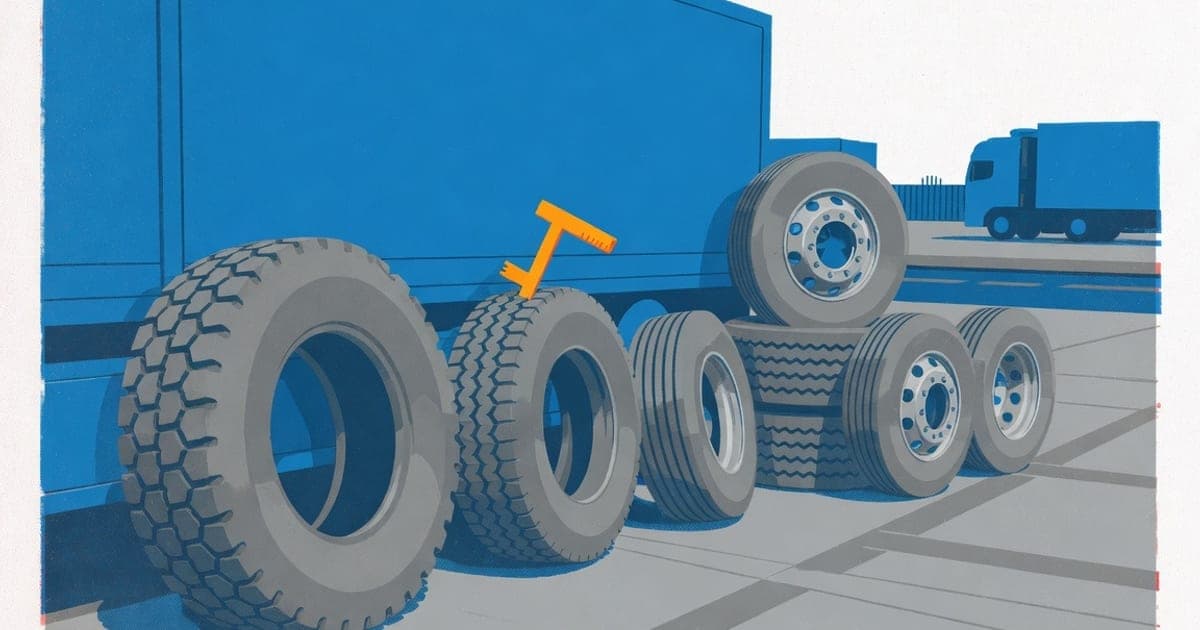
Tyre revolutions per kilometre come from the tyre manufacturer's data book for the exact size and tread; as a worked example only, taking a common 11R22.5 drive tyre figure of about 307 revolutions per kilometre from tyre data tables: at 100 km/h the wheels turn 307 x 100 / 60, about 512 rpm. Through 4.11 diffs the tailshaft turns about 2,104 rpm, and with an 0.73 overdrive top gear the engine sits near 1,536 rpm. Swap to 3.70 diffs and the same truck cruises near 1,383 rpm; swap the top gear to direct (1.0) and the 4.11 truck is screaming at 2,104. Run your own numbers with your actual tyre data sheet, gearbox ratios and target cruise revs, and you can evaluate any truck's driveline from its spec sheet before you ever drive it.
That interaction is why ratio, gearbox and tyre size are one decision, not three. An overdrive gearbox wants numerically higher diffs than a direct-drive box for the same cruise revs, and moving between tyre profiles shifts the sum again. It is also why the transmission choice covered in Roadranger versus AMT cannot be separated from what diffs the truck carries.
Ratios for linehaul, tipper, local delivery and heavy haulage
We are deliberately not printing a table of factory ratios per truck model: those vary by build, market and options, and an unsourced table would be exactly the kind of confident wrong number this site refuses to publish. What holds is the direction of the trade:
| Work | Gearing direction | Why |
|---|---|---|
| Single trailer linehaul | Numerically lower (taller) | Cruise economy at highway speed, modest take-off demands |
| B-double and roadtrain | Middle to numerically higher | Startability and grade pulling at high combination mass |
| Tipper, vocational, site work | Numerically higher (shorter) | Constant heavy take-offs, low speed control, PTO work |
| Metro distribution | Middle | Stop-start torque without highway screaming |
| Heavy haulage | Numerically highest | Startability at extreme mass outranks cruise revs entirely |
Where a specific truck should land inside those directions is set by the engine's torque curve and the manufacturer's driveline application charts, which dealers and manufacturers publish for exactly this purpose. Use their charts for the model in question; use the formula above to sanity-check anything a salesman tells you.
Two speed and multi speed diffs
Older and vocational trucks add another layer: two speed diffs, which carry two selectable ratios in the one carrier, shifted electrically or by air, giving a low range for loaded work and a taller range for the run home. They were common in older Japanese medium-duty trucks and vocational gear, and they still trade steadily in the used and parts market. On inspection, confirm the shift actually works in both directions under way, because a two speed stuck in one range is a carrier rebuild conversation. Related but different: the inter-axle power divider lock and cross locks (diff locks) on tandem drive trucks are traction devices, not ratio changes, and a listing boasting "diff locks" is telling you about traction, not gearing.
How to identify the ratio already in a truck
Never take a listing's word for the ratio; verify it one of these ways, cheapest first:
- Read the tag or stamp. Most diffs carry the ratio on a tag under a carrier bolt or stamped on the housing or carrier, and axle model plates decode to a ratio through the maker's documentation. Photograph what you find.
- Count driveshaft turns. With drive wheels safely off the ground and the truck secured, turn the tailshaft by hand and count its revolutions for one full wheel revolution. On a live axle with both wheels free, count against one wheel with the other held, or have both wheels turn together, and remember diff action can halve what one free-spinning wheel shows; done carefully this gets you close enough to confirm or contradict a tag.
- Count the teeth. The definitive answer: crown wheel teeth divided by pinion teeth is the ratio, read with the inspection cover off. This is the check that settles arguments at a wrecker.
On tandem drive trucks, check both axles, because mismatched tandems do happen in badly repaired trucks and the result is a driveline fighting itself.
Changing a ratio: cost and what else must change
Re-gearing is routine work for a driveline shop, but it is never just one part. The genuine shopping list: crown wheel and pinion sets or complete changeover carriers or complete axles, and on a tandem drive truck both axles must end up matched, because the power divider links them and unequal ratios load the driveline against itself. Then the follow-on items: the speedo and ECM need recalibrating to the new final drive and tyre size so the speedo reads true and the engine's shift and economy logic behaves, and any downstream electronics that assume road speed need to agree. Whether to buy new gear sets, changeover carriers or complete secondhand axles is a price-and-provenance decision like any used driveline purchase; the checks that keep you safe buying secondhand carriers are in what actually bolts up in gearbox and diff swaps, and used carriers and axles trade constantly in the truck and trailer parts listings.
Buying a truck with the wrong ratio
A truck with the wrong diffs for your work is not automatically the wrong truck; it is a right truck with a quoted cost attached. Get a driveline shop's written changeover price, subtract it from your offer, and say so plainly in the negotiation, the same evidence-based method that runs through all our buying guides. Sometimes the mismatch is your opportunity: fleet linehaul trucks with tall diffs sell cheaper to tipper buyers who then re-gear, and the arithmetic can beat buying the scarcer factory-spec truck. Do the sum with real quotes, not hope, and check the rest of the truck against how kilometres and hours read together while you are at it.
What to do next
Work out your target cruise revs from the engine spec sheet, run the formula against your gearbox and tyres, and you will know the ratio you are shopping for before you open a single listing. Then filter the current truck listings with that number in hand and verify tags on anything you shortlist. Selling? The ratio is a search term buyers genuinely use, so list your truck free with the diff ratio, gearbox model and tyre size stated together in the description; the buyer doing this arithmetic is the most serious buyer you will meet.