Truck Tyre Sizes and Costs in Australia: Reading the Sidewall and the Bill
7 min read
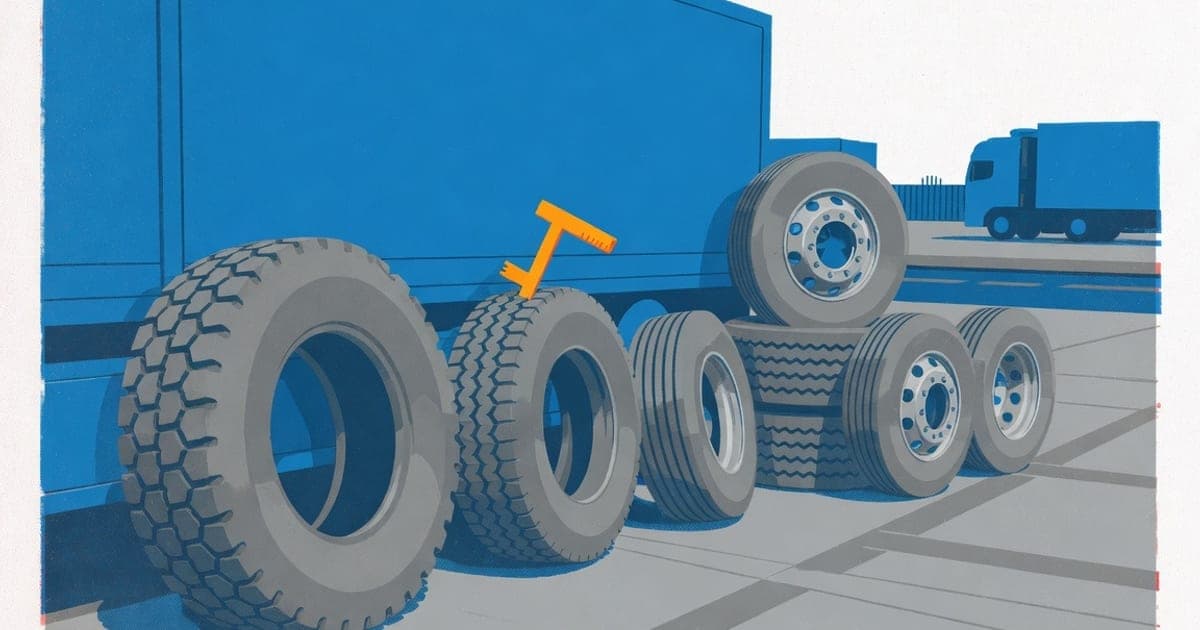
Truck tyres are sized in a code that tells you everything once you can read it, and priced across a range wide enough that the rubber on a used truck can swing its real value by five figures. A typical prime mover and tri-axle trailer combination runs 22 tyres; at even mid-range prices that is a five-figure asset rolling on the road, wearing out on a schedule the sidewall and the tread depth let you read in advance. This guide covers the sidewall code, the common Australian sizes and where each runs, what tyres are advertising for in August 2026, and how to count the rubber when you are pricing a used truck or trailer.
Reading a truck tyre sidewall
Take 295/80R22.5, the most common size on Australian highway prime movers, as read from tyre manufacturer technical references such as the Michelin and Bridgestone truck tyre data books:
- 295: section width in millimetres.
- 80: aspect ratio, the sidewall height as a percentage of the section width.
- R: radial construction.
- 22.5: rim diameter in inches, the one imperial holdout in the code.
- After the size comes a load index, one number for single fitment and a pair (such as 152/148) for single and dual fitment, each translating to a maximum load per tyre in a table published by the manufacturer, and a speed symbol letter for the rated speed.
- Older-style sizes like 11R22.5 give the section width in inches (11 inches) with a standard-profile sidewall implied rather than stated.
Also on the sidewall: ply or load rating, the DOT date code showing week and year of manufacture (rubber ages whether or not it wears), and regroovable marking where present. The load and speed markings are compliance items, not suggestions, covered below.
The common Australian sizes and where they run
| Size | Where you see it |
|---|---|
| 295/80R22.5 | Steer and drive on highway prime movers and heavy rigids |
| 11R22.5 | The older-pattern equivalent, still everywhere on fleets and vocational trucks |
| 385/65R22.5 | Wide single on steer axles of some prime movers and on trailer axles as super singles |
| 275/70R22.5 | City buses and some metro rigids, low floor heights |
| 265/70R19.5 and 245/70R19.5 | Medium-duty rigids and larger light trucks |
| 235/75R17.5 | Trailer axles on drop decks and lighter trailers |
The practical use of this table is buying used: a truck or trailer on an oddball size is a truck whose tyres cost more and arrive slower, and a trailer on 17.5 inch rubber cannot swap wheels with your 22.5 inch fleet. Commonality is worth money.
Steer, drive and trailer tyres are not interchangeable in practice
The same size comes in three patterns doing three jobs. Steer tyres run rib patterns for straight-line stability, even wear under steering load and water clearance. Drive tyres run block or lug patterns for traction, and wear fastest under torque. Trailer tyres are built for free-rolling loads and scrubbing in tight turns. Fleets sometimes rotate worn drive casings to trailer positions, and position-specific tyres exist for good mechanical reasons; run a drive pattern on a steer axle and it will follow ruts, wear unevenly and unsettle the front end. When you count tyres on a used unit, count them by position: eight good trailer tyres do not compensate for two dead steers, because the steers are the two you replace immediately.
Load index, speed rating and what compliance requires
The tyres fitted to a heavy vehicle must be adequate for the loads and speeds the vehicle is rated to run. The load index pair and speed symbol on the sidewall must line up with what the vehicle's manufacturer specified and what vehicle standards require: heavy vehicle standards administered through the NHVR in participating states set tyre requirements, including the condition, marking and suitability rules an inspector checks, and fitting tyres below the specified load or speed rating can put the vehicle outside its standards with the insurance consequences that follow. We are deliberately not quoting threshold numbers here: check the vehicle's tyre placard or manufacturer specification, and the NHVR vehicle standards material at nhvr.gov.au, and treat the placard as the floor, not a suggestion. The same applies to minimum tread depth: heavy vehicle standards set the legal minimum, and the National Heavy Vehicle Inspection Manual is the reference an inspection will actually be run against, so confirm the current figure there rather than from a remembered number, this page included.
What tyres are advertising for, August 2026
Observed advertised per-tyre prices across the national commercial tyre chains and online tyre retailers in early August 2026, for common 22.5 inch sizes, excluding fitting and disposal, and stated plus GST as commercial tyre pricing usually is:
| Position and tier | Advertised range observed |
|---|---|
| Steer, premium brands | Roughly $550 to $950 plus GST |
| Steer, budget imports | Roughly $250 to $450 plus GST |
| Drive, premium brands | Roughly $550 to $1,000 plus GST |
| Drive, budget imports | Roughly $250 to $500 plus GST |
| Trailer, premium | Roughly $400 to $750 plus GST |
| Trailer, budget | Roughly $200 to $400 plus GST |
| 19.5 and 17.5 sizes | Roughly $200 to $700 plus GST across tiers |
Those are advertised asking ranges, not fitted quotes: fitting, balancing, disposal and call-out change the bill, fleet pricing undercuts everything above, and prices drift, so ring for numbers on the day. The spread between tiers is the real story: a full set for a prime mover and trailer combination can differ by roughly a factor of two between budget and premium, which is why the next section is the one that matters.
Cost per kilometre, not cost per tyre
Fleets buy tyres on cost per kilometre: purchase price divided by kilometres delivered, tracked per position, because premium tyres routinely deliver more kilometres, retreadable casings and better fuel economy, and sometimes still lose on the arithmetic for a given operation. The honest method is to track your own: record fitment date, position and odometer, record removal, divide. Manufacturers publish wear claims and fleets publish nothing, so your logbook is the only number that is true for your trucks on your routes at your pressures. The wider version of this arithmetic, fuel, servicing and rubber together, is in our running cost per kilometre guide, and the retread side of the equation, where casings earn their second life, is in our retread versus new guide.
What shortens tyre life, in rough order of damage done: underinflation, overloading, alignment, aggressive driving, and heat. Pressure discipline is the cheapest tyre technology in existence.
Valuing the rubber on a used truck or trailer
Count the tyres before you negotiate. Positions, sizes, brands, tread remaining, even wear or scalloped, and dates from the DOT codes: ten minutes with a tread gauge prices the next two years of rubber. A 22-tyre combination needing steers now, drives within six months and trailer rubber inside a year is carrying a bill you can estimate from the table above, and that estimate belongs in your offer, stated plainly. Sellers who have just fitted budget tyres to freshen a sale have spent the least possible money to change your first impression; check dates and brands, not just tread.
Wheels: steel, alloy and stud patterns
Wheels carry their own value and their own compatibility trap. Steel is cheap, heavy and repairable; alloy saves real weight (payload) and looks after itself if not kerbed. The trap is fitment: modern heavy trucks standardised on 10-stud fitments for 22.5 inch wheels, but older and Japanese-market patterns differ, and offset and centre bore matter as much as stud count. Verify against the wheel and hub markings and the manufacturer fitment guide rather than eyeballing, especially when buying loose wheels; used wheels and rubber trade constantly in our tyres, wheels and rims listings, and a listing without the full fitment detail is a question to ask, not a gamble to take. If you have takeoff wheels or near-new rubber on the shelf after a fleet change, list them free with size, fitment, brand and DOT dates: rubber sells fast when the detail is complete.
Advertised price ranges observed across national commercial tyre retailers and online sellers in early August 2026, plus GST, and they will drift. Tyre standards, load and speed requirements and tread depth minimums: confirm current rules with NHVR (nhvr.gov.au) and the vehicle's placard before fitting or passing an inspection on the strength of this page.