Load Restraint Basics: What Australian Law Actually Requires
6 min read
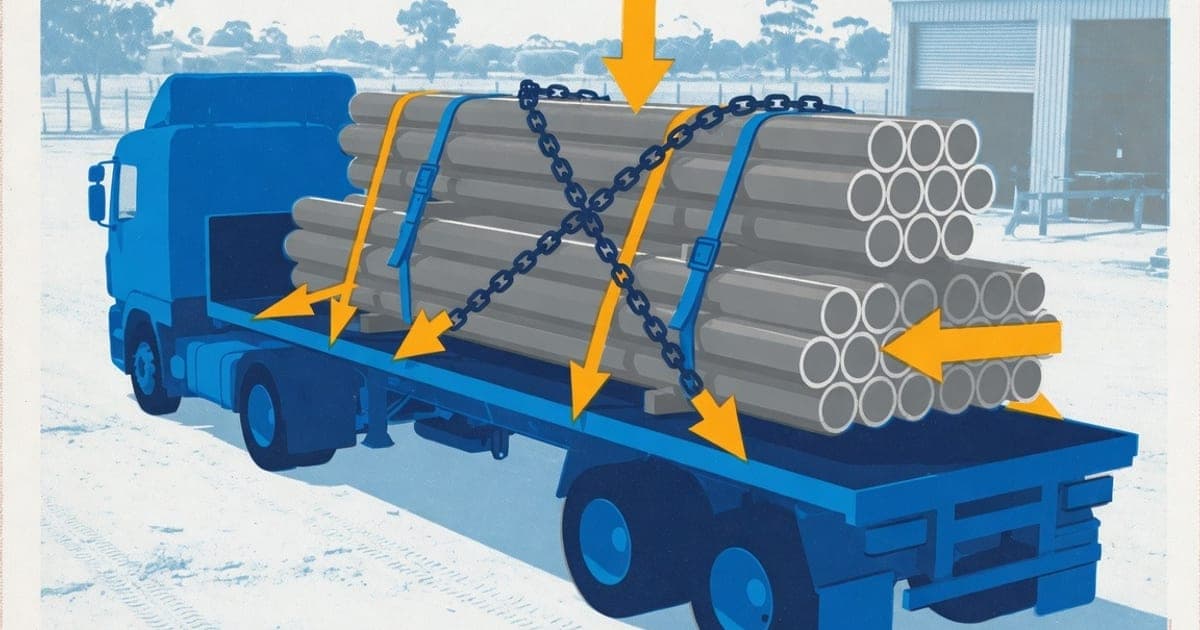
Australian load restraint law does not hand you a simple rule like two straps per pallet. It sets a performance standard: your restraint system must stop the load moving relative to the vehicle under defined forces, and how you achieve that is up to you. The authoritative reference is the Load Restraint Guide 2018, published by the National Transport Commission and referenced by the NHVR, and the core requirement it states is that the loaded vehicle must restrain the load against 0.8 g deceleration forward, 0.5 g rearward, 0.5 g sideways, and, where friction or limited vertical displacement is relied on, 0.2 g vertically. Get the method right and the strap count falls out of the arithmetic; get the method wrong and no number of straps saves you.
A performance standard, not a list of rules
The Guide's approach is deliberate: loads vary too much for prescriptive rules. Instead, the law asks whether your system would hold the load under the stated accelerations, which correspond to hard braking, cornering and rough roads rather than to crashes. The often-quoted plain-English translation in the Guide's material: the restraint must hold the entire weight of the load forward under heavy braking, and half of it sideways and rearwards.
Two consequences follow. First, "it has never moved yet" is not compliance, because the standard is about the emergency stop you have not had yet. Second, the standard applies loaded as driven: part-unloaded multi-drop configurations must comply at every stage of the run, which is where a lot of real-world restraint quietly fails.
The forces, in practical terms
0.8 g forward means a restraint job equal to 80 per cent of the load's weight acting toward the cab. A 10 tonne coil wants 8 tonnes of forward restraint. Rearward and sideways, half the weight. The vertical 0.2 g exists because corrugations and potholes momentarily unweight the load, and friction only works while weight pushes the surfaces together, which is why restraint that relies on friction must account for it.
Tie-down, direct, blocking and containment
The Guide groups methods into two families, and the difference is the most useful thing on this page.
| Method | How it works | Where it suits |
|---|---|---|
| Tie-down (friction) | Lashings clamp the load onto the deck so friction resists sliding | General freight, pallets, packs with good friction surfaces |
| Direct: blocking | Load bears against headboard, bulkhead or pins | Heavy dense items, machinery against a gooseneck |
| Direct: attachment | Chains or straps connect the load itself to rated points | Plant and machinery, steel, anything with lashing points |
| Containment | Sides, gates, cradles or frames enclose the load | Loose items, drums, some coil and pipe work |
Tie-down is the everyday method and the most misunderstood: the lashing's job is to create clamping force, so its effectiveness depends on tension, lashing angle and the friction between load and deck. Direct restraint takes friction mostly out of the equation, which is why machinery moves on chains to rated points rather than under a spider web of hopeful webbing.
Working out capacity: lashing capacity and friction
Every rated lashing carries a marked lashing capacity, and the arithmetic differs by method. In direct restraint the lashing capacity works against the load's forces via geometry. In tie-down, what matters is pre-tension and friction: a strap contributes clamping force, the deck-to-load friction converts clamp into restraint, and steep angles work better than shallow ones.
We are deliberately not publishing a straps-per-tonne rule, because there is not one: the answer moves with friction (rubber load mat against dressed timber against wet steel), with angle, and with the strap rating. The Load Restraint Guide contains the worked tables and examples for exactly this calculation; use its numbers, not a rule of thumb from the loading dock. As equipment goes, that also means rated gear: marked straps and chains, edge protection so the strap keeps its rating over corners, and dunnage that positions the load rather than just lifting it.
Curtains are not restraint
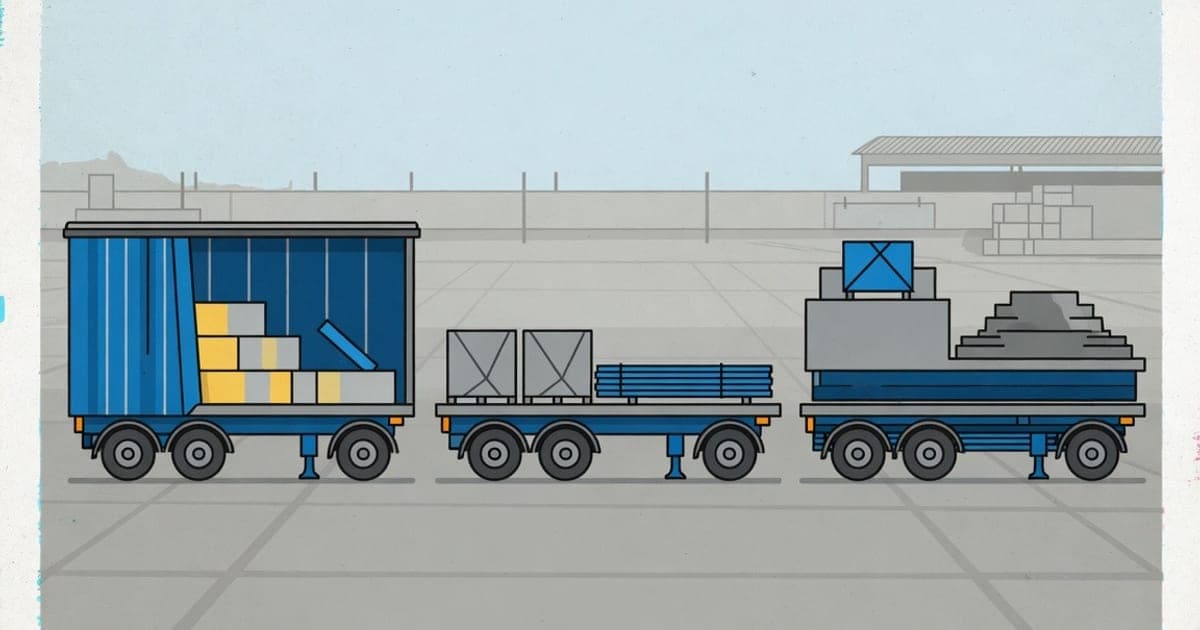
The single most useful correction in this post: the curtains on a standard curtainsider are weather protection, not load restraint. The Load Restraint Guide is explicit that ordinary curtains must not be relied on to restrain a load; the load inside a tautliner needs its own restraint as if the curtains were not there, unless the trailer is a certified load-restraint curtain system, rated and documented by its manufacturer for specified load types. Those certified systems exist and are excellent, but the certification is the point: no paperwork, no restraint rating. If you run tautliners, this changes how you load them, and if you are buying one, the certification is a genuine value difference between two otherwise identical trailers.
Chain of Responsibility: who is liable
Under the Heavy Vehicle National Law, restraint is not only the driver's problem. The Chain of Responsibility duties, as the NHVR sets out, extend to every party with influence over the transport task: consignors, packers, loaders, schedulers, operators and drivers each carry a positive duty to ensure, so far as reasonably practicable, the safety of the task, and loading and restraint sit squarely inside it. A warehouse that loads a trailer badly, or a consignor who pressures a driver to accept it, is exposed alongside the person holding the wheel. The practical defence is boring and effective: documented restraint procedures matched to the Guide, equipment inspection, and the authority for a driver to refuse a bad load without argument.
Common load types and how they go wrong
Packs of timber and pallets fail through low friction and slack straps. Steel fails through weight concentration and edges cutting unprotected webbing. Machinery fails through restraint to unrated points, or riding on its own suspension so lashings go slack as it bounces; direct restraint with chains to rated points, per the machine and the Guide, is the answer. Mixed freight fails at the second drop, when the tight wall of freight that made everything work drives away. In every case the fix starts with the same question: which restraint method is actually doing the work here, and would it hold at 0.8 g?
The mass side of loading, where the load sits over axle groups, is a separate legal question with its own limits, covered in General Mass Limits explained, and the physical envelope you must stay inside is covered in dimension limits. Restraint, mass and dimensions all have to work at once on the same trailer.
What to do next
Download the Load Restraint Guide 2018 from the NTC at ntc.gov.au and keep it where loading happens, not in the office. Audit your gear against it: ratings legible, edge protection actually used, mats where friction is doing the work. If your restraint depends on equipment you do not own yet, gates, certified curtains, rated chains, treat it as part of the vehicle budget, and if you are upgrading trailers to get there, browse trailers for sale with restraint hardware on the checklist, or list the old one honestly described. Buying and selling safely has its own habits worth building, covered on our safety page.
Checked against the NTC Load Restraint Guide 2018 and NHVR Chain of Responsibility guidance on 6 August 2026. The Guide and the law are the authorities; where anything here and the Guide differ, follow the Guide.