AdBlue and SCR Faults on Australian Trucks: Symptoms, Costs and the Law
7 min read
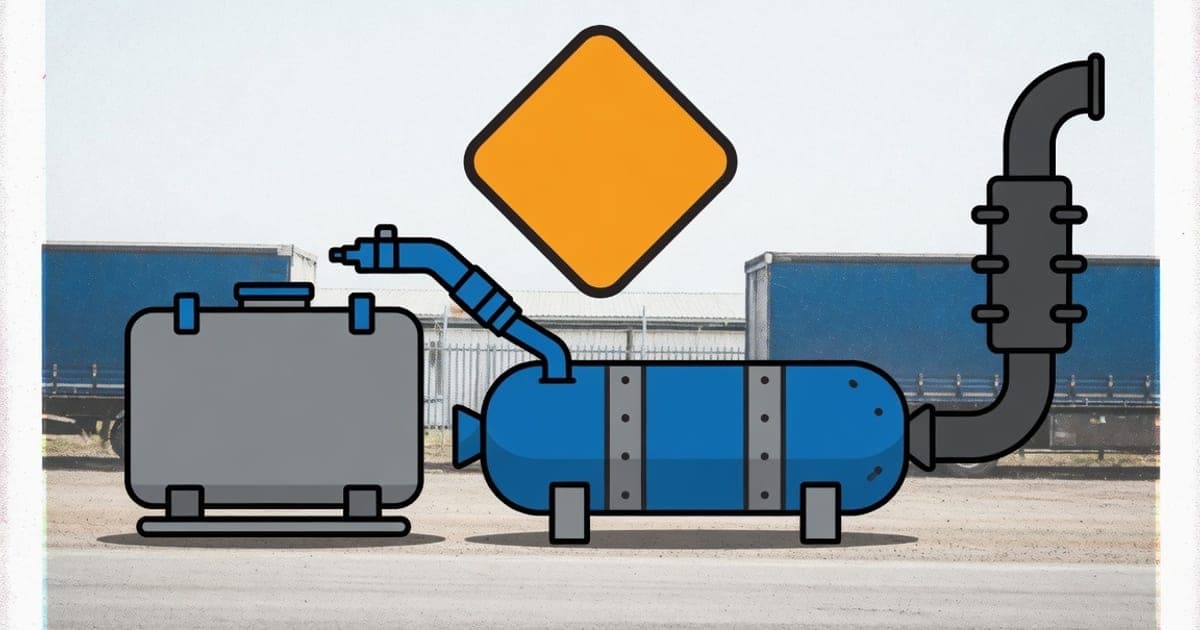
Most AdBlue trouble on Australian trucks comes down to a short list: crystallised urea blocking the dosing injector or lines, failed NOx sensors, a tired AdBlue pump, or contaminated fluid. The truck responds by warning you, then derating, and diagnosing the actual fault before throwing parts at it is the difference between a modest repair and a runaway bill. What you must not do is fit an emulator or delete the system on a road-registered truck: that is unlawful, and it follows the truck to the next owner. Here is how the system works, how it fails, and how to think about it when you are buying.
What SCR does and where AdBlue fits
Selective catalytic reduction is the main way heavy diesel engines meet modern NOx limits. The engine runs efficiently and produces nitrogen oxides, and the exhaust system cleans them up afterwards: AdBlue is injected into the hot exhaust ahead of the SCR catalyst, where it breaks down into ammonia and converts NOx into nitrogen and water vapour.
AdBlue itself is not a fuel additive and never touches the engine. It is a urea solution of nominally 32.5 per cent urea in demineralised water, made to the ISO 22241 standard, which is why it also goes by the name AUS 32. AdBlue is simply the best known trade name for fluid meeting that standard.
In the Australian market you will meet SCR on trucks built to ADR 80/03, the Euro V aligned emissions standard most of the current used fleet was supplied under, and on newer trucks built to ADR 80/04, the Euro VI aligned standard the Department of Infrastructure phased in for newly approved models supplied from November 2024 and all new heavy vehicles from November 2025. Euro VI trucks typically pair SCR with a diesel particulate filter, which brings its own maintenance story, covered separately in DPF cleaning versus replacement.
The common failure points
Workshops and operators report the same handful of failure modes again and again across Euro V and Euro VI fleets. Treat this as a field pattern rather than a statistic, because nobody publishes national failure rates.
| Component | What goes wrong | Typical symptom |
|---|---|---|
| Dosing injector and lines | Urea crystallises when the system does not purge properly or runs hot | Poor dosing, NOx efficiency faults, white crust at the injector |
| NOx sensors | Sensor elements age and fail, often the downstream one first | NOx efficiency or sensor circuit fault codes, derate warnings |
| AdBlue pump | Wear, crystallisation inside the unit, failed pressure build | Pressure fault codes, no dosing at all |
| Quality or level sensor | Sensor failure or genuinely poor fluid | Fluid quality warnings even with fresh AdBlue |
| Tank heater and temperature sensing | Less of an issue in most of Australia, but the circuits still fault | Implausible temperature codes |
| The fluid itself | Contamination, dilution, old stock | Repeat quality warnings, dosing damage over time |
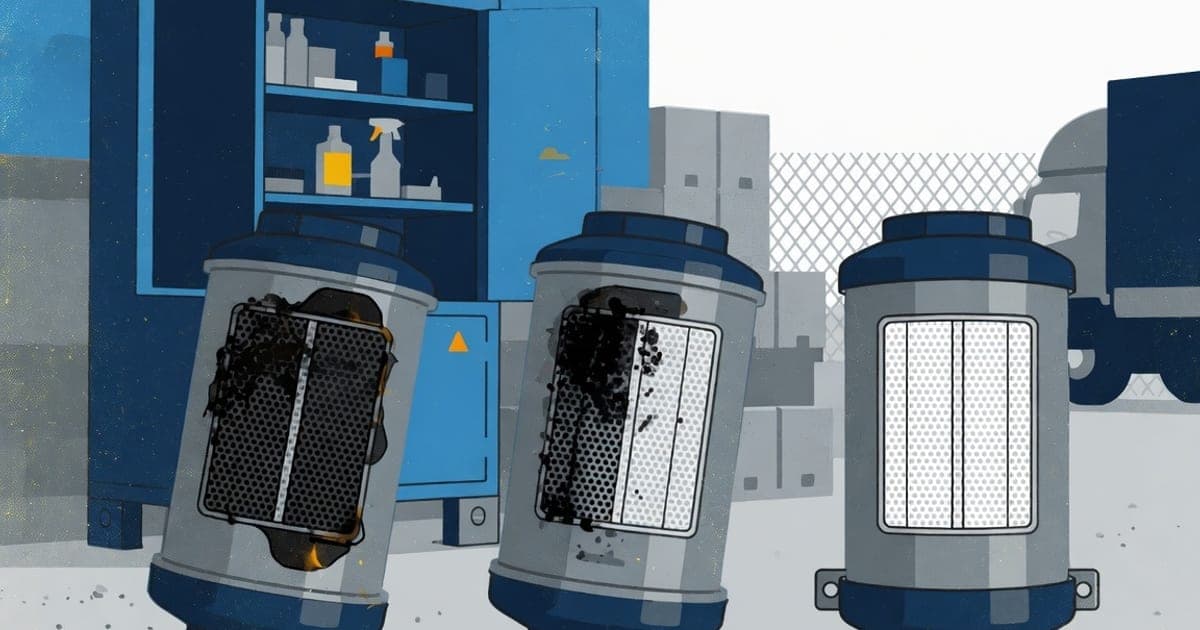
Crystallisation and NOx sensor failure are the two recurring themes. Crystallisation is often a symptom rather than a root cause: short duty cycles, an interrupted after-run purge when the engine is switched off, or a weeping injector all leave urea behind to dry into crystals.
Derate: what the truck does when the system faults
Emissions rules require the vehicle to discourage running with a defective SCR system, so manufacturers build in an inducement strategy. The exact steps vary by brand, but the pattern is consistent: first a warning lamp and message, then a torque reduction if the fault persists or the tank runs dry, and on many vehicles a speed limitation after further ignition cycles. The truck is designed to get you somewhere that can fix it, not to keep working through the fault.
Two practical points. First, do not keep driving through the warning phase hoping it clears; every stage you let it escalate makes the visit to the workshop more urgent and more expensive to schedule. Second, running the AdBlue tank dry triggers the same inducement path as a hardware fault on many vehicles, so treat the gauge like a fuel gauge.
Diagnose before you replace parts
The expensive mistake with SCR systems is parts-cannon repair: replacing the NOx sensor because the code mentioned NOx, then the injector, then the pump. A NOx efficiency code does not say which component failed. It says the measured result was wrong, which can be caused by a lazy sensor, poor dosing, crystallised deposits ahead of the catalyst, a fouled catalyst, or bad fluid.
A workshop with the proper diagnostic tooling can command the pump to build pressure, run a dosing quantity test, read both NOx sensors live, and test fluid concentration with a refractometer in a couple of minutes. Ask for that evidence before you approve parts. If you are quoted a catalyst, ask what testing ruled out the cheaper causes upstream of it.
Repair and replacement cost in Australia
We are deliberately not publishing dollar figures here, because SCR repair pricing varies widely by brand, by whether parts are genuine or aftermarket, and by how early the fault was caught, and because the figures circulating online mostly trace back to marketing pages rather than invoices. A commonly repeated repair figure in Australian search results comes from a tuning company blog, which is exactly the kind of source not to rely on.
What holds generally: individual sensors and injectors sit at the painful but tolerable end, pumps and dosing modules cost more, and SCR catalyst replacement is the bill you are trying to avoid, which is why early diagnosis matters. Get an itemised quote, ask what diagnostic steps sit behind it, and price genuine against reputable aftermarket for truck and trailer parts before committing. A second quote on a four-figure SCR job is rarely wasted time.
Emulators and deletes: what the law actually says
You will find people selling AdBlue emulators and delete services in Australia. On a road-registered heavy vehicle, using them is unlawful. A registered truck must continue to comply with the heavy vehicle standards it was built to, which include its emissions controls under the ADRs, and the Heavy Vehicle National Law backs that with penalties for operating a non-compliant vehicle. State environment protection regulators also carry their own offences for tampering with emissions controls. We are not quoting section numbers or penalty amounts here because they are the regulator's numbers to state: check with the NHVR at nhvr.gov.au and your state EPA if you want chapter and verse.
The practical consequences are wider than a fine. A deleted truck can be defected, an insurer can take a very unhelpful view of a non-compliant vehicle after a claim, and the delete follows the truck into the used market, where it becomes the next buyer's problem and a legitimate reason to walk away or reprice. If a truck you are selling has been tampered with, the honest path is to rectify it before sale. If that gear came off a truck you have since returned to stock, list the surplus parts rather than leaving them on the shelf.
AdBlue storage, shelf life and contamination
AdBlue is fussy for a fluid that looks like water. The ISO 22241 series covers handling and storage as well as quality, and the guidance is simple to apply: keep it sealed, keep it out of sunlight and heat, and use dedicated clean equipment for transfer. Heat shortens its usable life, so a drum that has sat in the sun outside a shed for a year is suspect stock. Never top the tank up with water, and never use garden-shed funnels that have seen diesel or coolant: the dosing system and catalyst are sensitive to contamination in parts-per-million quantities, and dilution is one of the things the quality sensing on Euro VI trucks exists to catch.
Buy from outlets with turnover, in packaging with the standard marked on it, and if a truck in your care keeps flagging fluid quality with fresh fluid in the tank, test the fluid before condemning the sensor.
Buying a used truck with SCR history
SCR history is not a reason to avoid a truck, but unexplained SCR history is. When you are inspecting, ask directly: has the AdBlue system been repaired, what was replaced, and is there an invoice. Scan for current and stored fault codes rather than taking the dash lamp's word for it, since codes can be cleared before an inspection. Look at the dosing injector area for crystals, look at the tank filler for signs of contamination, and check the AdBlue consumption pattern with the seller: a truck using almost none may not be dosing.
Be alert to the delete problem in reverse: a truck that runs suspiciously clean of SCR faults because someone has fitted an emulator is a truck you cannot lawfully register and operate as it sits. Emissions compliance sits alongside the rest of the paperwork checks in our used prime mover buying checklist, and if you are importing or looking at an older truck, the emissions standard it was built to matters for what you are allowed to do with it, covered in ADR compliance for used and imported trucks.
If the truck checks out, an SCR system with a documented repair is arguably better than one that has never been touched at high kilometres. Browse trucks for sale with that lens: service history on the emissions system is now as much a part of the file as engine and gearbox history.
Checked against NHVR and Department of Infrastructure guidance on 6 August 2026. Emissions and vehicle standards rules change; confirm the current position with the NHVR, the Department of Infrastructure and your state EPA before relying on this.