What Size Excavator Do You Actually Need? 1.7t to 30t Compared
7 min read
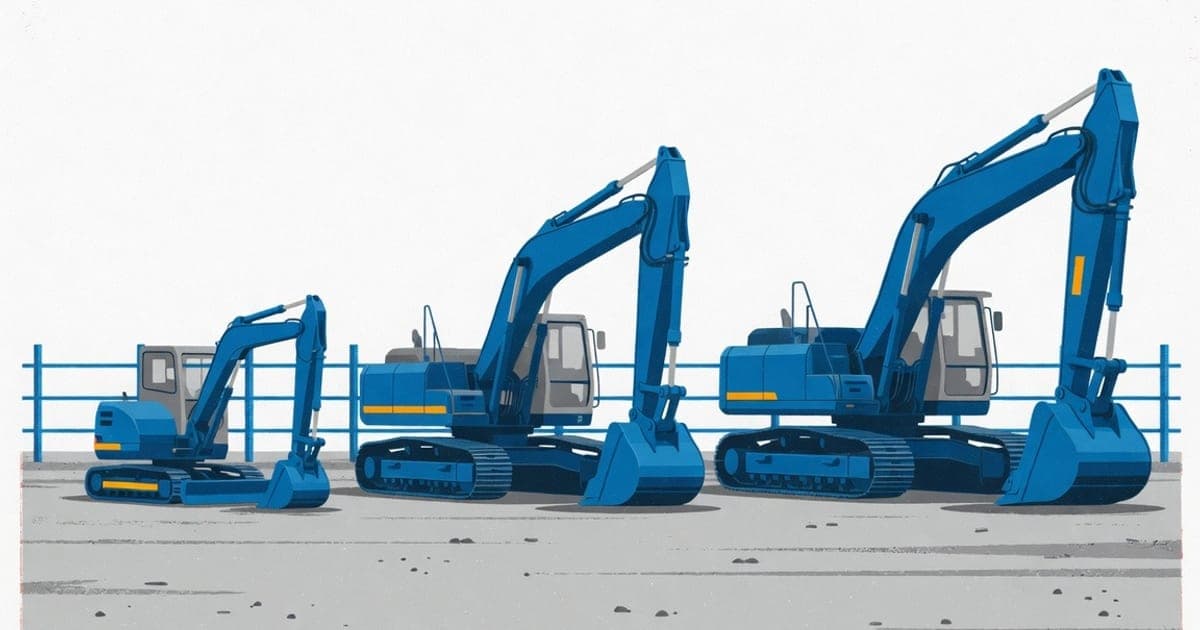
Most buyers pick an excavator size by looking at what everyone else on site runs, and most of the time that lands them on a 5 tonne machine. That is often the right answer, but not because it digs best. It is the right answer because it fits on a plant trailer behind a ute or light truck, squeezes through most residential access, and lifts enough to be useful. The honest way to size an excavator is to start from the work: the deepest trench you will dig regularly, the tightest access you must fit through, and how the machine will get to site. Get those three right and the size picks itself.
Start from the work, not the machine
Three questions decide the class before you look at a single listing.
First, dig depth and reach. A machine that digs your regular trench at 60 to 70 percent of its maximum depth will do it all day. A machine working at its full stretch is slow, unstable when lifting, and hard on pins and bushes. Maximum dig depth and reach figures vary between models within a class, so treat any figure in this post as a class generalisation and confirm the exact number on the manufacturer's specification sheet for the model you are pricing.
Second, access. The gap between the house and the fence decides more machine purchases in Australia than any spec sheet. If your work is residential backyards, the width of the machine with blade fitted is the number to check, not the dig depth.
Third, transport. Every step up in operating weight changes what it takes to move the machine, and moving it is a cost you pay every job, not once.
Under 3 tonne: access, trailer towing and residential work
The 1.7 to 3 tonne class exists for one reason: it gets where bigger machines cannot. Retracting undercarriages on many models let them narrow to fit through a standard gate, and the whole package, machine plus trailer, can sit under the towing capacity of a well specced ute. Check the sums on your actual setup though: machine, buckets, trailer tare and the ute's rated towing and gross combination mass all interact, and an overloaded combination is an offence everywhere in Australia. Your state road authority publishes the rules for light vehicle towing.
What you give up is everything else. Small machines lift little, bog easily, and their dig depth suits services and footings rather than serious earthworks. They also work harder for a living: many spend their life on hire, so hours on used examples run high for their age. If you are weighing one up, the checks in our used excavator inspection checklist apply just as much at 1.7 tonnes as at 20.
The 5 tonne class: the all-rounder and why it dominates
The 5 tonne class is the most traded excavator size in Australia, and the reasons are practical rather than romantic. It is big enough to dig house footings, pools, and service trenches at a productive rate. It lifts enough to place pipe and handle a decent hammer. And critically, it moves on a plant trailer behind a light truck rather than needing a dedicated float.
That popularity cuts both ways for a buyer. Supply is deep, so you can be choosy on condition and attachments. But demand is deep too, so nothing hangs around cheap. The forces that set prices in this class, and what moves a given machine within its band, are covered in what a used excavator actually costs, so this post will not repeat the figures.
8 to 14 tonne: civil and larger residential
Between 8 and 14 tonnes you get real production capability: deeper trenches, bigger buckets, the stability to lift heavier pipe and to run larger hammers and augers. This is the class for subdivision work, larger demolition, and civil jobs where a 5 tonner would be the bottleneck.
The step change is transport. These machines need a proper float or tag trailer behind a genuinely heavy truck, and the combination now sits squarely inside heavy vehicle mass and dimension rules. That means the truck, the trailer and the loaded weight all need to be legal against the limits the NHVR administers, and it means the person towing needs the right heavy vehicle licence class for the combination.
20 tonne and up: bulk earthworks and quarry
At 20 tonnes and beyond you are buying a production machine for bulk earthworks, road jobs and quarry work. Nothing in the smaller classes touches the cost per cubic metre of a 20 tonner in open ground. The machine itself is often better value per tonne secondhand than small machines, because the buyer pool is thinner: fewer owner-operators can move one, house one or use one.
Everything around the machine gets more serious. Floats at this weight are dedicated heavy plant trailers, often low loaders. Wide tracks or fitted attachments can push the loaded combination over general width limits, which turns a routine move into an oversize movement. And ex-mine or ex-quarry machines carry their own history: hard hours in abrasive material, which shows up in exactly the components that cost the most to replace.
Transport: what each class needs to move and what that costs
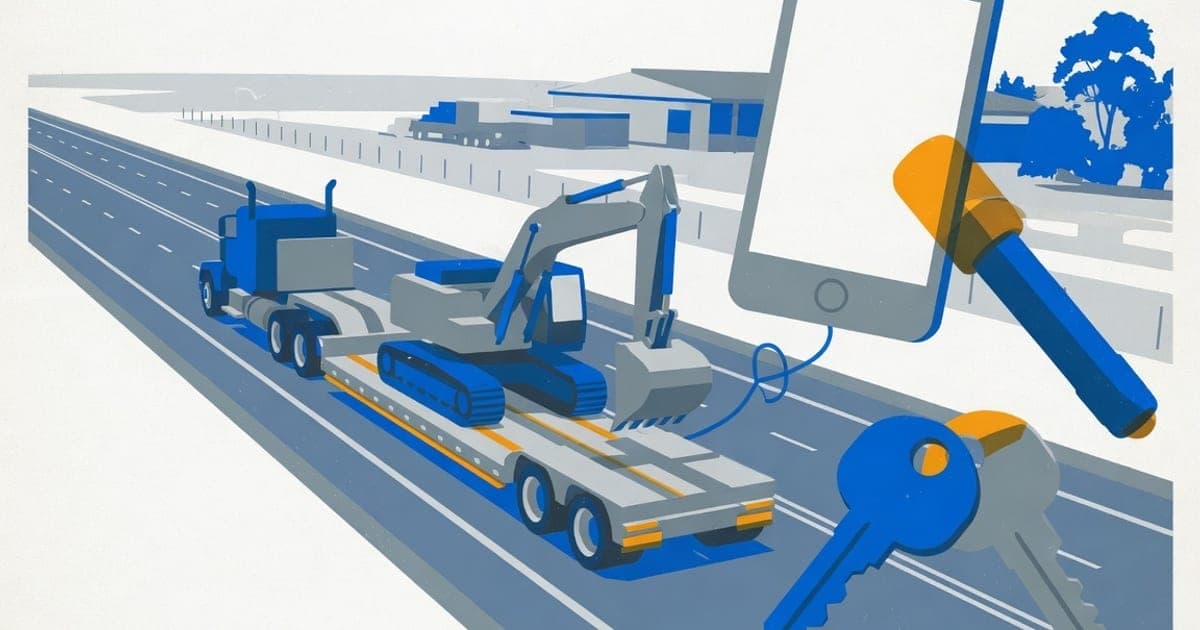
Transport is the cost buyers forget, so it deserves its own table. Treat the trailer descriptions as typical arrangements, not legal advice: the mass and dimension rules that govern each combination are set out in the Heavy Vehicle (Mass, Dimension and Loading) National Regulation administered by the NHVR, and those rules changed on 1 August 2026, so check the current limits at nhvr.gov.au before you commit to a transport plan. Oversize or overmass movements need an access permit through the NHVR portal in participating states; in Western Australia and the Northern Territory, which sit outside parts of the Heavy Vehicle National Law, Main Roads WA and the NT authority run their own arrangements.
| Class | Typical transport | What to check before buying |
|---|---|---|
| 1.7 to 3 tonne | Plant trailer behind a ute or light truck | Combination mass against the tow vehicle's ratings and your licence |
| 5 tonne | Plant trailer behind a light truck | Trailer ATM, ramp rating, and whether your truck licence covers the combination |
| 8 to 14 tonne | Tag trailer or small float behind a heavy rigid or prime mover | Heavy vehicle licence class, combination mass, float availability in your area |
| 20 tonne plus | Dedicated float or low loader | Width with tracks and attachments, access permits, float hire cost per move |
If you will not own the float, price float hire per move in your area before you buy the machine. A big machine that costs real money every time it moves can lose its productivity advantage on scattered small jobs.
Attachments and hydraulic flow by size
Attachments are where machine size quietly locks you in. Auxiliary hydraulic flow and pressure rise with machine size, and an attachment matched to one class will underperform or fail on another. A hammer sized for a 20 tonner will never run properly on a 5 tonne circuit, and a 5 tonne hammer on a 20 tonner risks damage to the attachment. Pin diameters, pin centres and dipper widths also change by class, so buckets do not move between size classes either. Before you assume any attachment carries over, work through how excavator hitch and attachment compatibility actually works, because a shed full of orphaned buckets is money you already spent.
One more compliance point that applies across classes: operating requirements for plant sit under work health and safety law, which is state-based. Some plant and some tasks require high risk work licences or documented competency, and the rules are set by your state WHS regulator (SafeWork NSW, WorkSafe Victoria, WorkSafe Queensland's equivalent under the Office of Industrial Relations, SafeWork SA, WorkSafe WA and so on). Do not assume a national rule; ask your regulator what applies to the machine and the task.
Buy, hire or wet hire
The sizing decision interacts with the ownership decision. A 5 tonner you use weekly is usually worth owning. A 20 tonner you need for one bulk job a year is usually worth hiring, and if you also lack an experienced operator, wet hire (machine with operator) prices the risk of an expensive machine in inexperienced hands into the hourly rate. A reasonable rule: own the size you use constantly, hire the sizes you use occasionally, and never buy a machine to suit your biggest job of the year if that job is rare.
What to do next
Decide your class from the work, then go look at real machines with the class in mind rather than falling for a bargain in the wrong size. Current stock across every size class is in the earthmoving and construction listings. And if this exercise tells you your current machine is the wrong size, the market for it is right here too: list it free with the hours, undercarriage condition and included attachments in the description, because those are the first three questions every buyer will ask.
Transport and permit references checked against NHVR guidance on 6 August 2026. Mass and dimension rules changed on 1 August 2026; confirm current limits with the NHVR, or with Main Roads WA or the NT authority in those jurisdictions, before relying on this.