Heavy Vehicle Dimension Limits in Australia: Height, Width, Length and Overhang
6 min read
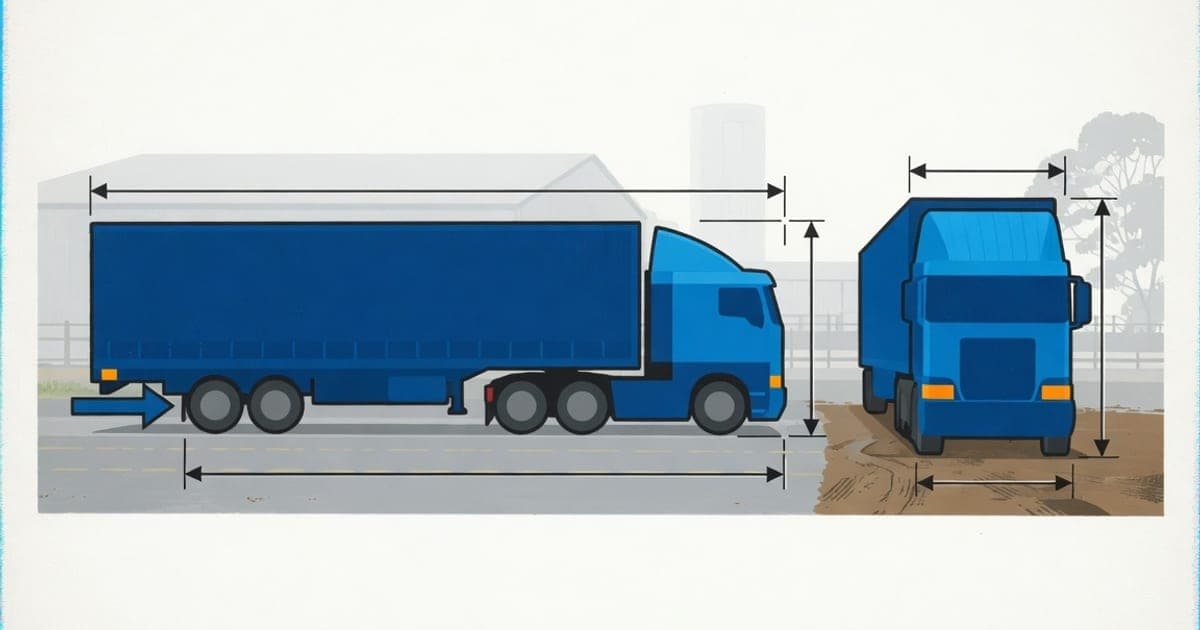
The dimension rules for heavy vehicles in the Heavy Vehicle National Law states are set by the Heavy Vehicle (Mass, Dimension and Loading) National Regulation and administered by the NHVR, and the general limits are: 4.3 metres high, 2.5 metres wide, 12.5 metres long for a rigid vehicle, and, from 1 August 2026, up to 20 metres for several common combinations that were previously capped at 19. The single most important thing to understand is that the limits apply to the vehicle together with its load: a legal trailer with an over-height excavator on it is an over-height vehicle. Everything below is checked against NHVR guidance on 6 August 2026, with the exact clauses in the MDL Regulation.
Why dimension limits exist and who sets them
Dimension limits are about infrastructure and other road users: bridge clearances, lane widths, intersection swept paths and sight lines. In the HVNL states the limits sit in the MDL Regulation under the national law, enforced by the NHVR. Western Australia and the Northern Territory do not apply the HVNL; their rules come from Main Roads WA and the NT road transport authority, and if you operate there, check with them rather than reading NHVR numbers across.
Height
The general height limit, per the NHVR's dimension guidance, is 4.3 metres. The regulation carries specific exceptions above that: vehicles built to carry cattle, horses, pigs or sheep may run to 4.6 metres, as may vehicle carriers with at least two decks and certain specified semi-trailers, while double-decker buses have a 4.4 metre limit.
Say it again, because it is the common misunderstanding: height is measured over the vehicle and its load together. Buying a drop deck rather than a flat top is often precisely a height decision, working back from 4.3 metres to what your tallest cargo can be, and the trade-offs between trailer styles are covered in tautliner versus flat top versus drop deck.
Width
The general width limit is 2.5 metres. The exception worth knowing, per the NHVR: Safer Freight Vehicles, rigid or cab chassis trucks and prime movers fitted with specified safety features, may be up to 2.55 metres, and the NHVR notes that reform is implemented in all the participating states. The 2.55 metre allowance does not extend to trailers or buses.
Certain devices are excluded when width is measured, mirrors being the everyday example; the NHVR's guidance on measuring width, VSG36, has the detail, and it is worth reading before you assume a projecting fitting is free. Load is not excluded: a load wider than the limit puts you into oversize territory, permits and all.
Length by combination
Length is where configuration matters most. The figures below are from the NHVR's length guidance and its Mass, Dimension and Loading changes fact sheet.
| Vehicle or combination | General length limit |
|---|---|
| Rigid truck or other single vehicle | 12.5 m |
| Bus, other than articulated | 14.5 m |
| Articulated bus | 18 m |
| Combination other than a B-double or road train | 19 m, rising to 20 m from 1 August 2026 for specified combinations meeting conditions |
| B-double | 25 m, with 26 m available subject to conditions |
| Vehicle carrier combination | 25 m |
| Road train | 53.5 m |
The 1 August 2026 change deserves unpacking, because it is conditional, not automatic. Per the NHVR fact sheet, the 20 metre limit applies to a prime mover and semi-trailer, and to rigid truck combinations with a pig, dog or tag trailer, subject to requirements. For trailers over 10 tonnes gross trailer mass in a combination between 19 and 20 metres, the trailer must have brakes compliant with ADR 38/05 or later, powered by the towing vehicle. For truck and trailer combinations, the extra metre is intended to come from the truck, with trailer dimension limits unchanged. For a 20 metre prime mover and semi-trailer, the geometry moves with it: the distance from the front articulation point to the rear overhang line can extend from 9.5 to up to 10.5 metres depending on prime mover wheelbase, side underrun protection to ADR 106 is required where it exceeds 9.5 metres, rear overhang extends from 3.7 to 4.0 metres, and the articulation point to rear of trailer distance from 12.3 to 14.5 metres. B-doubles were not included in this round of amendments.
If that reads like a set of interlocking conditions rather than a simple new number, that is because it is one. Speccing to 20 metres is a job for the regulation text and your trailer builder, not a blog table.
Front and rear overhang
Overhang limits stop vehicles sweeping across adjacent lanes and footpaths when they turn. The long-standing reference points in the NHVR guidance include the 12.3 metre articulation point to rear of trailer distance for semi-trailers and the 3.7 metre rear overhang line, both of which flex under the new 20 metre provisions described above. Overhang applies to the load as well as the bodywork: a few sticks of steel off the back of a tray can put a legal vehicle over, and load projection rules bring marking and visibility requirements with them. The restraint side of carrying awkward lengths is its own legal topic, covered in load restraint basics.
Loads that exceed the limits: oversize, over-mass and permits
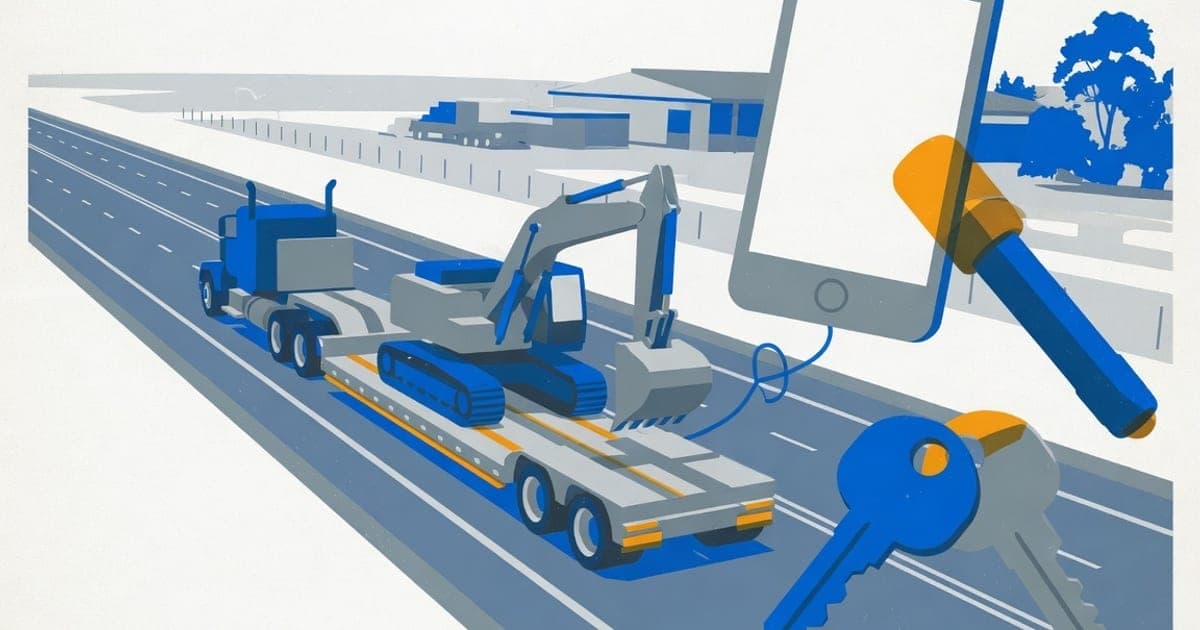
Some loads simply cannot fit inside general limits: excavators, house modules, tanks, long steel. The framework for moving them is the NHVR's oversize and over-mass system: notices that pre-authorise common cases, and permits for the rest, with conditions that can include pilot vehicles, travel times and route restrictions. We are describing the framework rather than listing conditions, because conditions vary by class, dimension and route; the NHVR's OSOM guidance and route planner are the working references, and in WA and the NT the equivalent schemes run through the state authorities.
The buying consequence: if your work regularly pushes past general limits, the permit regime is part of your cost base and your scheduling reality. Price it in before you buy the wider machine, not after.
How dimension limits shape what trailer you buy
Work backwards from the freight. Height-critical cargo pushes you to drop decks and low loaders; width-critical work pushes you into permit territory and pilotage economics; length rules decide whether your combination even exists as a general access vehicle. The 1 August 2026 20 metre provisions quietly changed the speccing conversation for new semi-trailer combinations, and the mass side of the same amendment, covered in General Mass Limits explained, changed the payload conversation at the same time.
When you are shopping, take a tape measure literally: verify overall height and length of the actual unit, loaded the way you will load it, rather than trusting the brochure figure for the model. Browse trailers for sale with your tallest and longest regular load in mind, and if a trailer in the yard no longer fits the work, list it free with honest measured dimensions in the description; the buyer who needs exactly those numbers is filtering for them.
Checked against NHVR guidance on 6 August 2026, including the height, width and length pages and the Mass, Dimension and Loading changes fact sheet for the amendments commencing 1 August 2026. Dimension rules change and WA and the NT run their own; confirm current limits with the NHVR, Main Roads WA or the NT authority before relying on this.