Will That Bucket Fit? Excavator Hitch and Attachment Compatibility Explained
8 min read
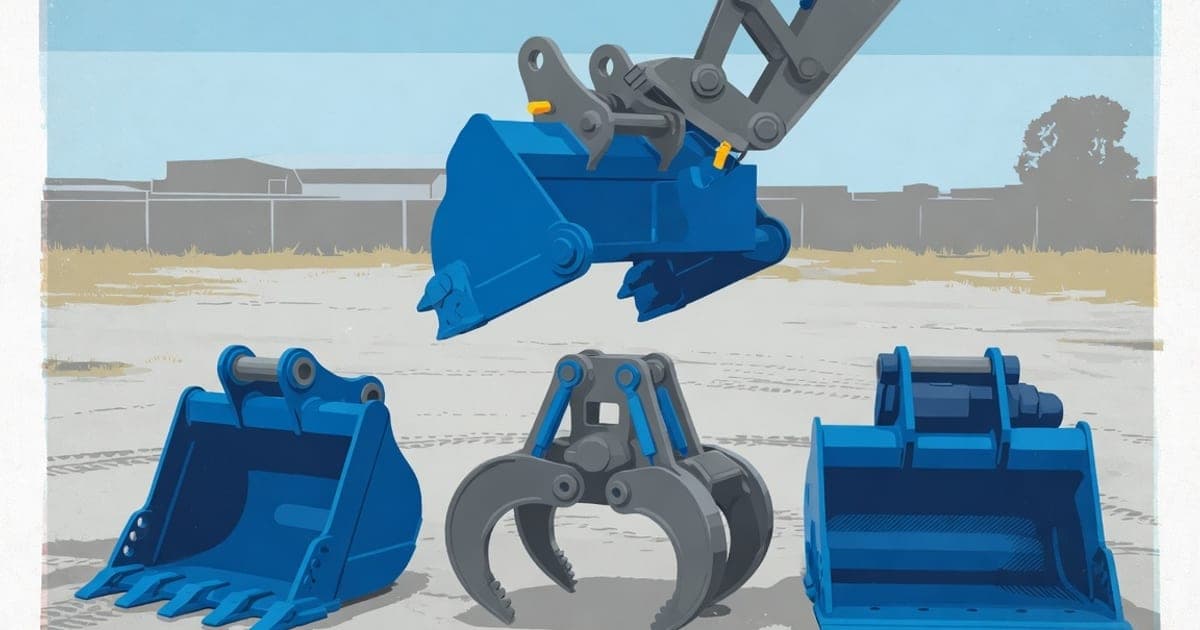
Whether a bucket fits an excavator comes down to four measurements, not the machine's tonnage, and whether a powered attachment works comes down to hydraulic flow and pressure, not the coupler it hangs off. "It fits a 5 tonner" is the most common line in secondhand attachment listings and it is close to meaningless: two 5 tonne machines from different brands can carry different pin diameters, different pin centres and different hitches entirely. This guide gives you the measurements to take, the hitch families to recognise, and the questions to ask a seller before money moves, because a shed full of orphaned buckets is money you already spent.
Why "it fits a 5 tonne" means almost nothing
Tonnage classes are marketing bands, not engineering standards. Within the same nominal class, manufacturers choose their own pin sizes and dipper geometry, and they change them between model generations. On top of that, many Australian machines do not run bare pins at all: they run a quick hitch, and the hitch brand and model then defines what hangs off the machine. An attachment that suits a pin-grab hitch on one machine may not suit the dedicated hitch on its neighbour, even at identical pin sizes.
So ignore the class talk and measure. Every fitment question collapses into numbers that fit in a text message, and any serious seller can supply them in minutes.
The four measurements that decide fitment
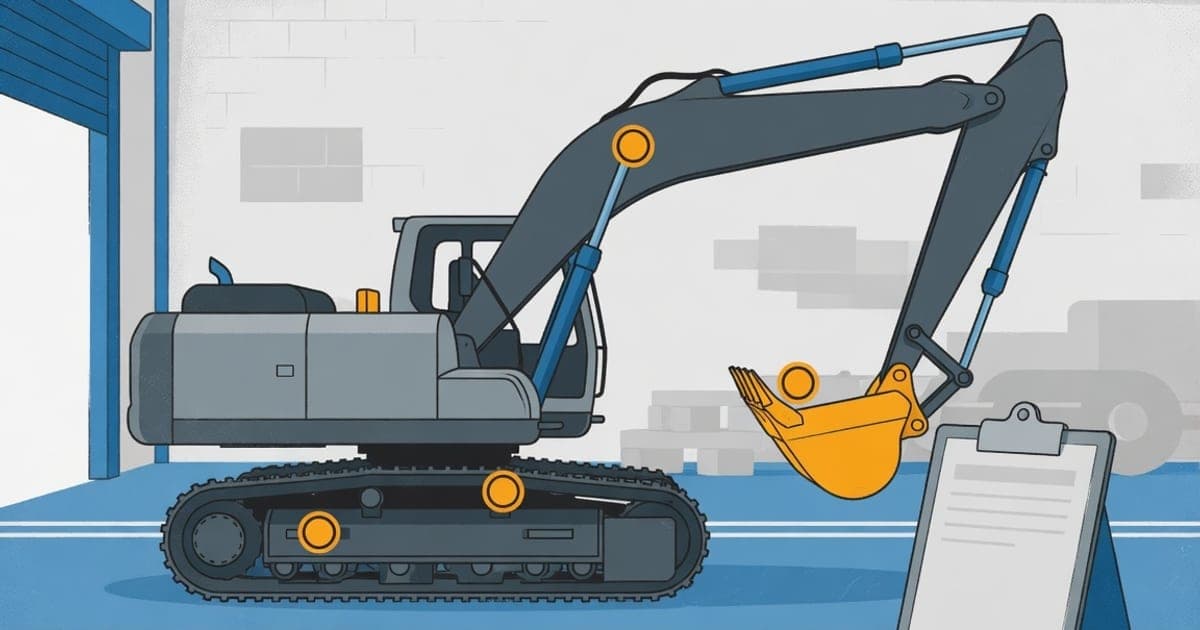
For a pinned attachment (and for what a pin-grab hitch must pick up), four dimensions decide everything:
| Measurement | What it is | How to take it |
|---|---|---|
| Pin diameter | Thickness of the two attachment pins | Measure the pin itself with callipers, not the worn hole |
| Pin centres | Distance between the centres of the two pins | Measure centre to centre with a tape, pins fitted |
| Dipper width | Width of the dipper (stick) nose that sits between the attachment ears | Measure across the dipper nose flats |
| Ear width | Inside distance between the attachment's ears or bosses | Measure inside face to inside face |
The pins must match the holes, the centres must match the hitch or linkage, the dipper must fit between the ears, and the ears must not be so wide the attachment slops sideways. Shims can take up modest ear clearance, and pins can be swapped in some cases, but pin centres are structural: if they are wrong, the attachment does not fit, full stop. Photograph and measure with the attachment on the ground and never work under anything held up by hydraulics.
Worn examples complicate honest measurement: a 65 millimetre pin in an egged 70 millimetre hole measures like a fitment and works like a failure. Measure pins and holes separately when the gear is old, and treat heavy slop as a rebuild cost, the same discipline applied to pins and bushes in the used excavator inspection checklist.
Hitch families: direct pin, pin grab and dedicated systems
Three broad families cover the Australian market.
Direct pin mounting is the original: the attachment pins straight to the dipper and link, no hitch. Cheapest, lightest, strongest for its weight, and changing attachments takes real minutes with a hammer and drifts. Common on mini excavators and on big machines doing one job all day.
Pin-grab quick hitches clamp onto the attachment's existing pins. Because they pick up standard pins at a range of centres, they are the flexible choice and the dominant style in Australian hire and civil fleets. Flexibility has limits: each hitch model accepts a range of pin diameters and centres, so "pin grab" alone does not answer fitment, the hitch's published range does.
Dedicated and proprietary systems use their own interface plate or geometry, with attachment families built to match. Australian and international names you will meet include Doherty, Attach2, Wedgelock, Miller, Geith and JB, alongside manufacturer-branded systems. Within a family, changes are fast and the connection is tight; outside it, you are buying adapters or new attachments. Buying a machine wearing a proprietary hitch means buying into that ecosystem, and pricing attachments accordingly.
Where sources disagree about a hitch model's accepted dimensions, and for older and rebadged hitches they genuinely do, believe the stamped plate on the hitch and your own tape measure over any chart, ours included. Print-outs do not pick up buckets; pins do.
Manual, semi automatic and fully automatic hitches
Hitches also split by how they lock. Manual hitches are pinned or screwed by hand at the attachment. Semi automatic types engage one end hydraulically and are secured with a manual pin or check. Fully automatic hitches lock and release from the cab, with the operator never leaving the seat.
This is where fitment stops being the only question, because quick hitch safety is a regulated, litigated subject in Australia. State work health and safety regulators, SafeWork NSW and WorkSafe Queensland among them, have published safety alerts and guidance on excavator quick hitches after fatal incidents in which attachments released unexpectedly and struck people nearby. The consistent themes in that guidance: hitches must positively retain the attachment, safety pins and locking checks must actually be fitted and used rather than hanging on a chain, operators must verify engagement with a test crowd and shake at ground level, and nobody stands within reach of a suspended attachment. If you are buying a used hitch, that history makes condition non-negotiable: worn jaws, missing safety pins, bypassed check valves or an unreadable plate are not discounts, they are disqualifiers. Read your state regulator's current guidance before choosing a hitch type, and treat hitch selection as a safety decision that happens to involve fitment, not the reverse. Our own marketplace safety page covers the buying-process side: inspecting in person, and not paying for gear you have not seen locked onto a machine.
Hydraulic requirements: flow, pressure and auxiliary circuits
Powered attachments add a second compatibility layer that has nothing to do with pins. Every hammer, auger, grab, shear and tilting hitch has a specified operating flow (litres per minute) and pressure, and the machine's auxiliary circuit must supply both, within range, through the correct plumbing:
- Too little flow and the attachment underperforms: the hammer strikes soft and slow, the auger crawls.
- Too much flow or pressure and you cook seals and motors; an undersized attachment on a big circuit fails early.
- Wrong circuit type: hammers need a one-way (drain-back) circuit, most grabs and augers a two-way circuit, and some attachments require a dedicated case drain line back to tank. Running a breaker without the case drain its motor requires is a classic way to destroy it, and the fault is invisible until the bill.
The numbers live on the attachment's plate and specification sheet and in the machine's auxiliary circuit specification, and matching them is arithmetic, not opinion. Manufacturer spec sheets state auxiliary flow for each machine model; if the machine's plumbing has been modified, flow-test it rather than trusting the brochure. The same logic governs skid steer attachments, where standard and high flow circuits divide the market, as covered in the compact machine comparison.
Skid steer and loader attachment carriers
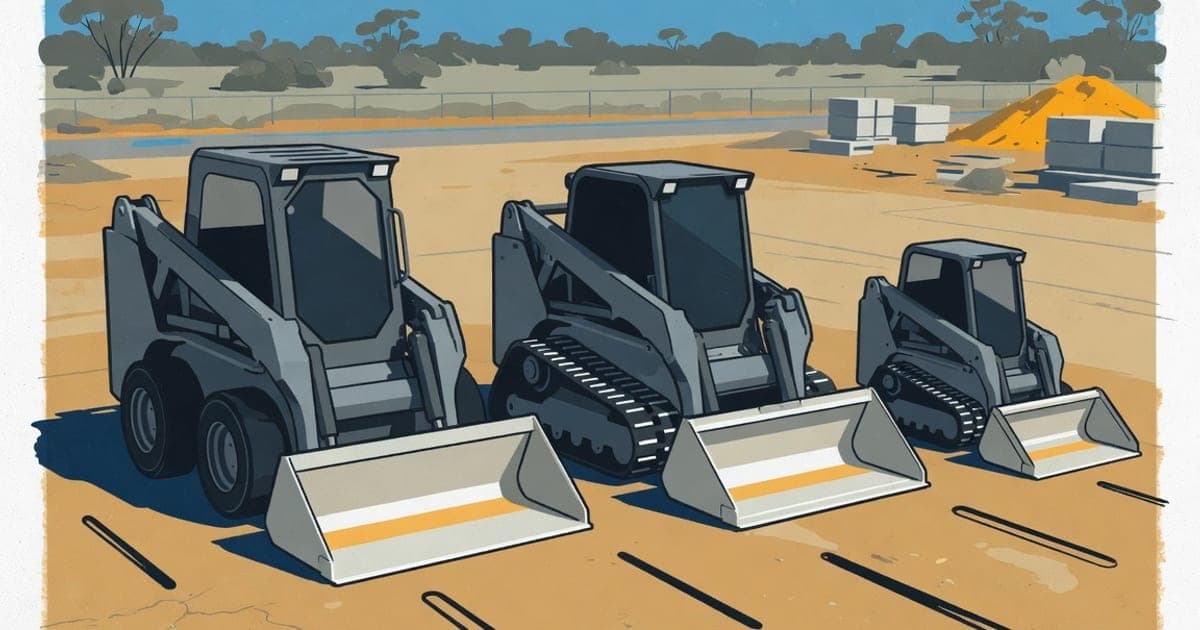
Skid steers and compact track loaders solved fitment a generation ago with the universal carrier plate: a common mounting face with levers or pins that lets buckets, forks and augers interchange across brands. It is the reason the secondhand skid steer attachment market is so liquid. The caveats: older and European machines can carry non-universal plates, mini loaders (Dingo, Kanga and friends) run their own smaller carrier patterns that do not interchange with full-size plates without adapters, and hydraulic matching still applies in full. A high flow mulcher does not care how neatly it clicks onto a standard flow machine; it still will not work.
What to ask a seller: the reference list
Send this list with every enquiry on a used attachment or hitch. A seller who answers from the gear, with photos, is worth your time.
| Ask for | Because |
|---|---|
| Make, model and serial of the attachment, photo of its plate | Identifies the family and its published specs |
| Pin diameter, measured on the pin | Worn holes lie; pins mostly do not |
| Pin centres, measured centre to centre | Structural; no shim fixes it |
| Ear width inside faces, and dipper width it came off | The width pairing that decides slop |
| Which machine and hitch it last worked on | Cross-checks every number above |
| For hitches: model plate photo, safety pin present, service history | Regulator guidance makes condition a safety matter |
| For powered gear: required flow, pressure, circuit type, case drain | Hydraulic match or an early failure |
| For powered gear: hoses and fittings included, or not | Missing hoses are a real cost on delivery |
Buying attachments secondhand without a costly mistake
The used attachment market rewards buyers who measure and punishes buyers who hope. Rules that keep you out of trouble: never buy on tonnage class alone; measure your own machine before you shop and keep the numbers in your phone; assume nothing about hydraulics until the plates on both ends agree; and price adapters honestly, because an adapter that costs a third of the attachment usually means it was the wrong attachment. Condition checks are quick: cracked welds, plate worn thin at the cutting edge, egged pin holes and rebuilt ears all show with a torch and a tape. Browse enough listings to learn what honest gear looks like, in the machinery parts and attachments listings, and check complete machines with hitches and attachment sets in the earthmoving and construction listings, because a machine sold with a matched attachment family is often the cheapest way to buy the attachments.
Selling works the same in reverse. The four measurements, a plate photo and the hydraulic spec turn a vague listing into a same-week sale, so if you have orphaned buckets from a machine long gone, list them free with the numbers in the first line of the description. The buyer who needs your exact pin centres is searching for them right now.
Quick hitch safety guidance referenced above is published by state WHS regulators; check your own state's current alerts and guidance before selecting or operating a hitch. Fitment ranges and hydraulic figures always defer to the plates and specification sheets of the actual machine and attachment.