Truck Wreckers and Dismantlers in Australia: How to Use Them Properly
6 min read
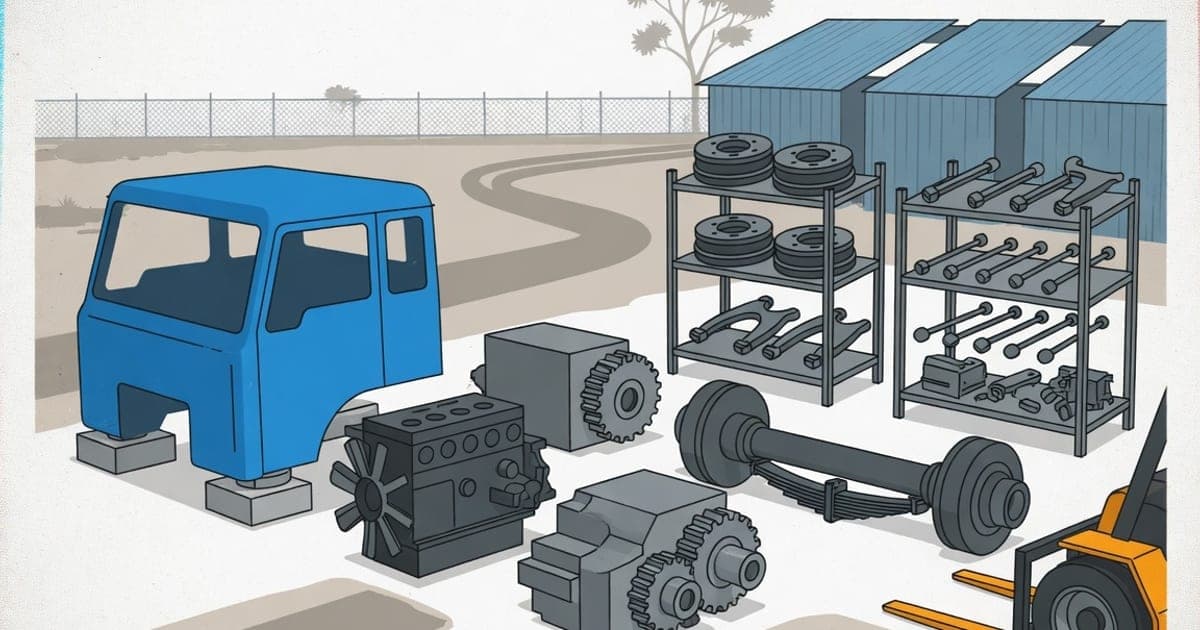
A truck wrecker is the cheapest source of most mechanical and body parts for anything more than a few years old, and the only realistic source for parts the manufacturer no longer stocks. Used properly, a dismantler saves you thousands and weeks. Used badly, they are how you end up with the wrong diff centre on a pallet, no return terms, and freight paid both ways. The difference is almost entirely in how you ask: quote the donor vehicle in full, get the part number where one exists, and get the warranty and return terms in writing before money moves.
What a truck wrecker actually holds
Dismantlers buy whole trucks: insurance write-offs, fleet retirements, deceased estates, repossessions and mechanical failures. A truck that hit a kangaroo at 100 km/h can have a perfect driveline behind a destroyed cab, and a truck with a spun bearing can have a perfect cab over a dead engine. The wrecker's business is matching the good half of one truck to the broken half of yours.
That shapes what they hold. Common fleet models are dismantled constantly, so late Isuzu, Hino, Fuso, Kenworth and Volvo stock moves through yards continuously. Rare European and low-volume models are thinner on the ground, and for those the working question is not "who has one" but "who has the donor truck standing in a yard somewhere". Many yards now list dismantled stock online, and many parts from dismantlers and operators appear as individual listings; browsing truck and trailer parts listings by part and model is often faster than ringing six yards.
Parts worth buying used, and parts that are not
The economics differ sharply by part, and pretending otherwise sells more used parts than it should.
| Usually worth buying used | Think harder | Avoid used |
|---|---|---|
| Cabs, doors, panels, bumpers, mirrors | Engines and gearboxes without records | Brake friction components |
| Glass, lights, interior trim | Turbos, injectors, ECUs | Steering components with unknown history |
| Diff centres and axle housings | Radiators and intercoolers | Anything lifted, load-rated or certified without paperwork |
| Chassis brackets, crossmembers, tanks | Clutches | Seatbelts and airbag components |
| Wheels, hubs, drums with measurable wear | Electrical harnesses | Tyres with unknown age or damage |
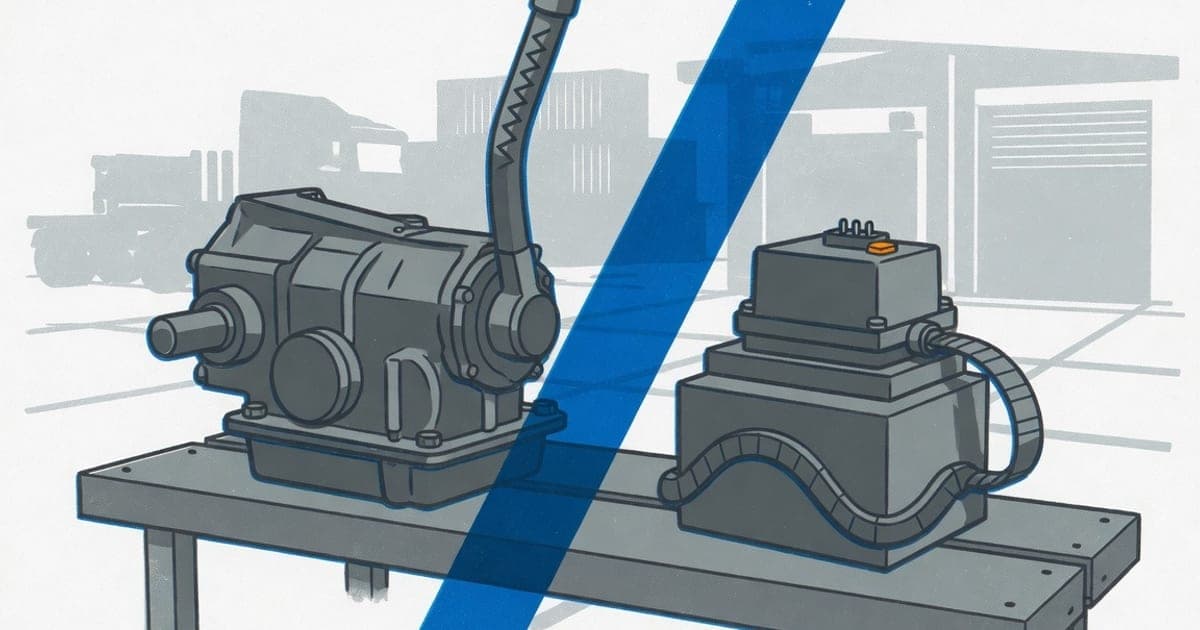
The left column is parts that either work or visibly do not. The middle column is parts whose condition is invisible from the outside: a used engine is a bet on the donor truck's history, which is why the donor details and any hour or kilometre evidence matter so much. The right column is safety-critical: brake, steering and restraint components carry consequences that dwarf the saving, and our guide to buying used parts without getting burnt covers the certification question in detail.
How to ask for a part so you get the right one
The single biggest cause of wrong parts is a buyer describing the truck loosely. "Diff for a Hino 500" is not a part request; Hino 500 covers many models, years, ratios and axle configurations. A request the yard can actually fill looks like this:
- Truck: make, model code from the compliance plate, year, VIN if asked.
- Driveline: engine code, transmission code, diff ratio off the plate or tag.
- The part: what it is, which side, and the part number if you can read one on the old unit.
- The failure: what the old part did, which sometimes changes what you actually need.
Give the yard that, and give them a photo of the old part in place. Thirty seconds of photography prevents most of the freight-both-ways disasters.
Part numbers, castings and donor vehicle details
Where a part number is legible, quote it, and expect the yard to quote theirs back. Numbers that do not match are not automatically wrong: manufacturers supersede part numbers, and two different numbers can be the same part a revision apart. What settles it is the manufacturer catalogue or dealer parts desk, which will confirm supersession chains. Casting numbers on housings and manifolds are not part numbers, but they narrow a match fast when the plate is gone.
Always get the donor vehicle's details in writing on the invoice: make, model, year, and engine or transmission codes. If the gearbox turns out wrong, the donor details are how you work out whether the yard picked wrong or you asked wrong, and that decides who pays the return freight. A yard that will not tell you what truck a part came off is telling you something.
Warranty and returns on used heavy parts
Used heavy parts commonly carry short warranties, sometimes none, and the terms vary yard by yard: some warrant an engine for a defined period against internal failure but exclude labour, some sell electrical parts on a strictly no-return basis, some offer exchange units with a casing charge refunded on return of your core. None of that is scandalous. What matters is that you get the terms in writing before paying, on the invoice, including who pays freight on a warranty return. A verbal "she'll be right, bring it back" evaporates precisely when you need it.
Where the seller is a business, Australian Consumer Law consumer guarantees can apply to the sale depending on the circumstances; the ACCC (accc.gov.au) covers when they attach. Do not rely on that instead of written terms. Written terms are enforced by a phone call; statutory rights are enforced by a process you do not want to run over a $700 alternator.
Freight: pallets, tailgate and depot pickup
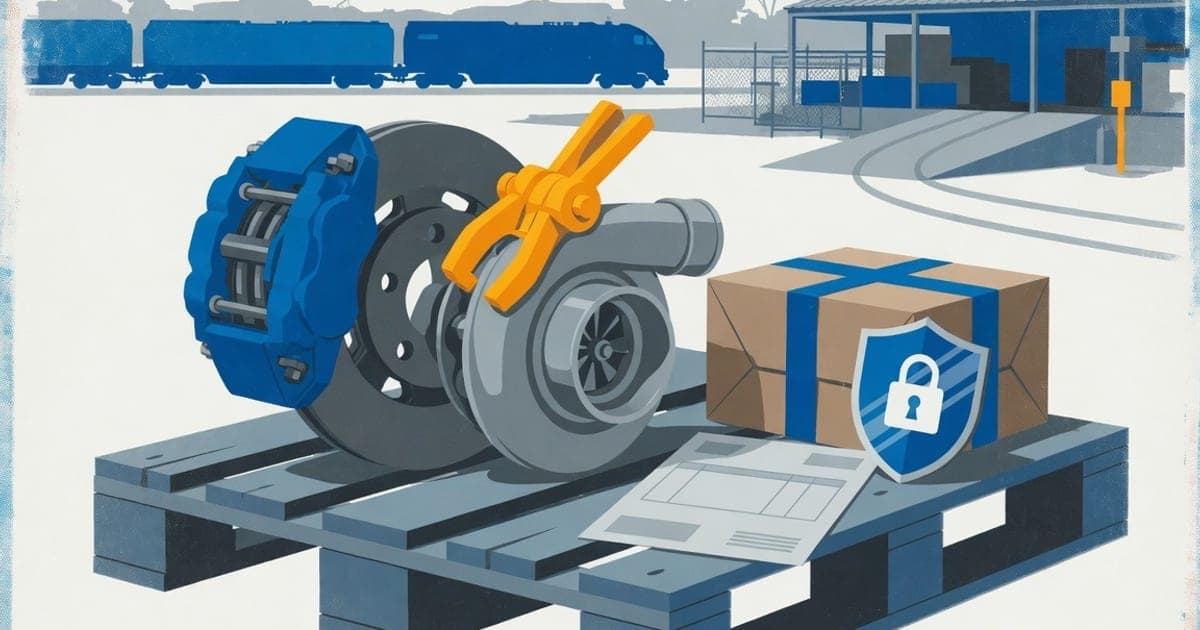
Heavy parts travel as freight, not parcels, and freight is a real share of total cost: a diff centre or cab travels strapped to a pallet, and residential delivery of a pallet needs a tailgate truck, which costs more than delivery to a business address or depot pickup. Before you commit, price the freight leg properly with our parts shipping calculator, and ask the yard three questions: what does it weigh packed, what are the pallet dimensions, and can I collect from your depot or nominate my own carrier.
Photograph the part at the yard if you can get them to send loading photos, and photograph it again on arrival before you sign the POD. Transit damage claims live or die on that pair of photos.
Wreckers by state, and what regional buyers should do
We are deliberately not publishing a name-by-state directory of wreckers here. Yards change hands, close and rebrand constantly, and a directory with dead entries wastes your time worse than no directory at all. The durable method beats the stale list:
- Search the model plus "wrecking" or "dismantling" plus your state; yards list dismantled trucks individually and those listings date themselves.
- Ring the yard and ask what they are currently wrecking in your model range. The answer tells you if the stock is real.
- Ask your mechanic and other operators running the same model. Fleet workshops know which yards supply them reliably.
- For regional buyers, the calculus flips: the yard is rarely local, so freight terms and accurate description matter more than distance. A well-described part freighted 1,500 km beats a vague one two towns over, and depot-to-depot freight keeps the cost sane.
Buying direct from other operators instead
The other source of used parts is operators who have them on the shelf: the spare gearbox bought for a truck since sold, the bumper from an upgrade, attachments that no longer fit anything in the yard. Prices are often better than a wrecker's because the seller is clearing space, not running a margin, and the provenance is usually one owner deep and explainable.
That trade needs a marketplace, which is exactly what the parts categories here are for. Browse truck and trailer parts and machinery parts and attachments with the donor details in the listing, and if that gearbox has been on your shelf since the rebuild, list it free with the part number and donor truck in the description. The buyer who needs it is searching that exact number.