Air Bag or Spring Suspension? What Trailer Suspension Choice Really Costs You
5 min read
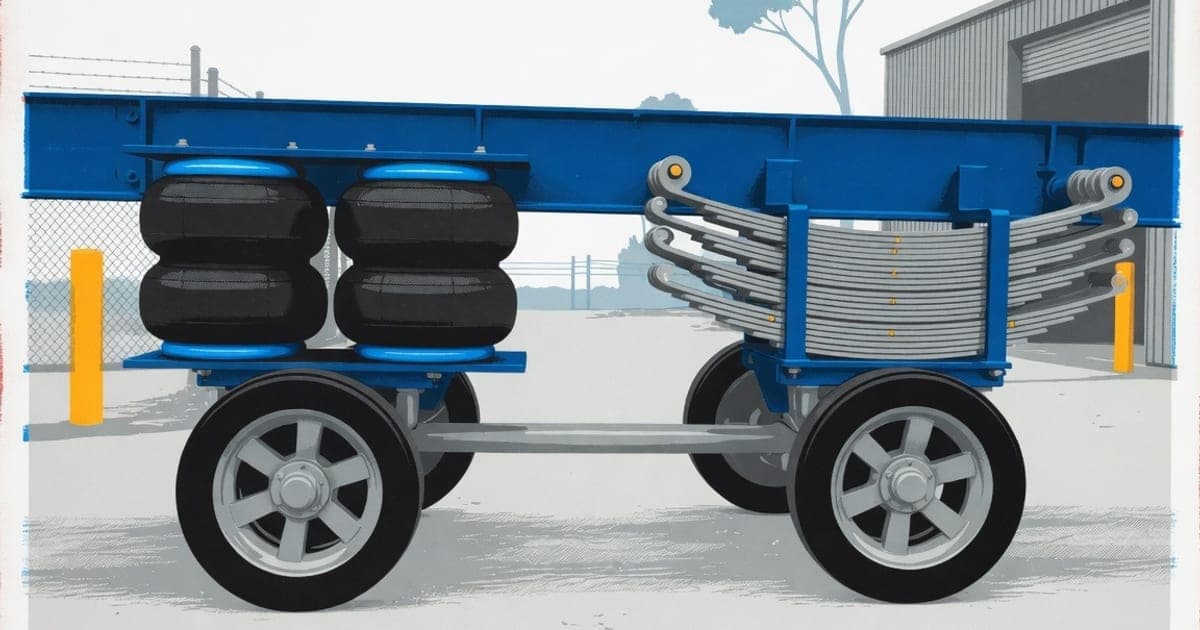
The spring versus air question on a used trailer is really three questions: what the freight needs, what the maintenance budget tolerates, and whether the business case depends on Higher Mass Limits access. Mechanical spring suspension is simple, cheap to fix anywhere, and hard on freight and infrastructure; air suspension rides better, protects sensitive loads, and is the pathway to HML, but only when it carries current certification as road-friendly suspension. That last clause is the insight this post exists for: the certificate is what the NHVR's rules reward, not the airbags, and plenty of air-suspended trailers are not certified. Here is how the two families compare in practice, and what to check before the suspension type decides what you pay.
The two families and how each works
Mechanical suspension carries the load on steel: multi-leaf spring packs in the familiar six-spring and camelback arrangements, with rockers and torque arms sharing load between axles. It has been the default on Australian trailers for decades because it is robust, roadside-repairable and tolerant of overload and abuse.
Air suspension carries the load on rubber air springs fed from the truck's air system, with a height control valve keeping ride height constant and shock absorbers doing the damping that steel friction used to fake. The result is a suspension that can be tuned to protect freight and pavement, at the cost of more components that can leak, perish and wear.
Ride quality and what it means for freight damage
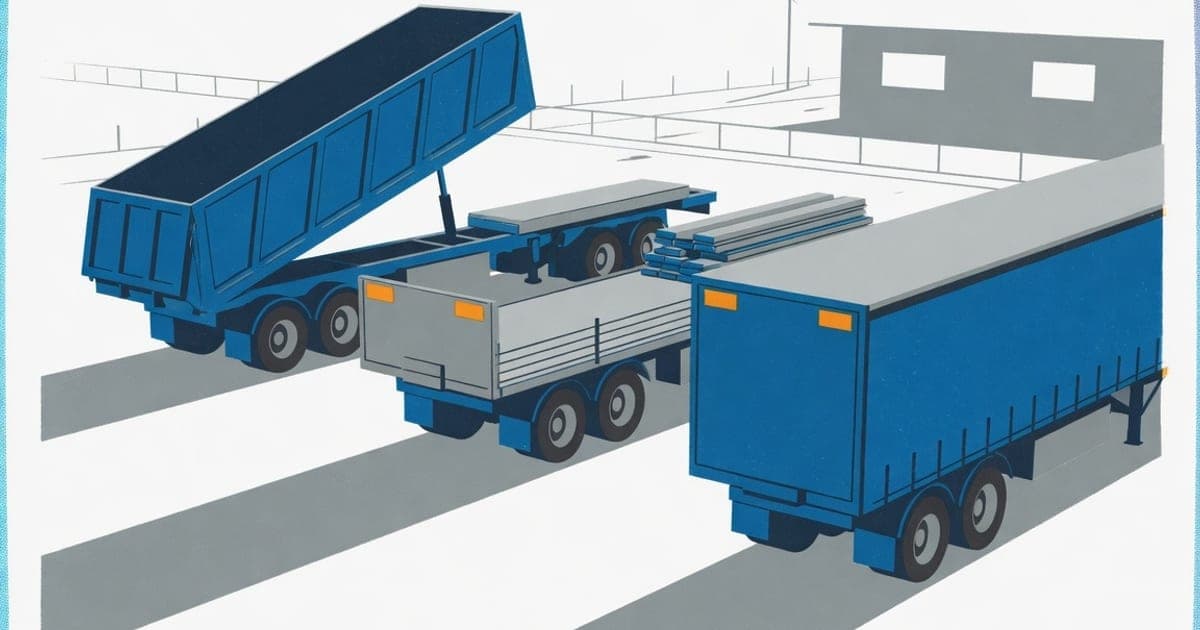
The air trailer's case starts with what arrives intact. Sensitive freight, packaged goods, electronics, produce and anything that documents transit damage rides measurably gentler on air, which is why linehaul fleets standardised on it, and freight customers increasingly specify it. Spring trailers transmit more shock into the load, which loose bulk product does not care about at all, which is why tipper and rough-site work kept steel long after linehaul left it. Match the suspension to what the freight forgives: it is the cheapest freight-damage decision you will make.
Tare weight and maintenance cost compared
On tare, the honest answer is that the difference between comparable modern spring and air groups is modest and build-dependent, so compare the two specific trailers on their weighbridge tickets rather than assuming either way.
On maintenance, the shapes differ more than the totals. Spring gear fails visibly and cheaply: pads, bushes, the odd cracked leaf, fixable in any town with a trailer shop. Air gear spends less in a good year and more in a bad one: bags, height control valves, air leaks and shock absorbers, plus the discipline of keeping dampers serviceable because a certified road-friendly system relies on its damping to stay compliant. Qualitatively, workshops describe spring as the low, flat cost line and air as the lower line with occasional steps; budget on that shape rather than on a single figure.
Road-friendly suspension and mass limit access: the certificate is the asset
Higher Mass Limits access under the NHVR's rules requires, among its conditions, that the relevant axle groups run certified road-friendly suspension, and certification is a formal status a suspension system holds against the applicable vehicle standards, not a description of how it feels. Two consequences follow for a used trailer buyer. First, not all air suspension is certified road-friendly: an air-ride trailer without certification buys you comfort and nothing else at the weighbridge. Second, the paperwork travels with the specification, so demand the evidence: the suspension model, its certification status, and documentation tying it to this trailer. The full picture of what the mass limit tiers allow and require, including accreditation and network access conditions, is in the CML and HML guide, and note the mass rules changed on 1 August 2026, which reworked how the old tiers apply, so verify the current position at nhvr.gov.au before you pay a premium for HML capability.
If your business case includes the extra tonnes, price trailers as certified or not-certified first and spring-versus-air second, because that is how the revenue actually divides.
Common failure points on used trailers of each type
| Suspension | What wears | What to inspect before buying |
|---|---|---|
| Mechanical spring | Bushes, wear pads, rocker pins, cracked or flattened leaves, hanger wear | Sight every leaf, lever the bushes, look for sagged or mismatched packs and elongated hanger holes |
| Air | Bags, height control valves, air leaks, shock absorbers, levelling geometry | Perished or chafed bags, trailer sitting level at height, valve response, oil-misted or dead shocks, air loss with the system charged |
On both types, hangers and mounting welds are structure, not suspension: cracks there are chassis conversations. A trailer that has run overloaded shows it in the suspension first, so read the wear pattern as the trailer's biography.
Retrofitting: when it makes sense and when it does not
Converting a spring trailer to air is technically routine and commercially marginal. The conversion changes the trailer's compliance status, so it needs engineering sign-off and, where HML is the goal, a certified system installed as certified, all of which runs through your state road authority's modification process. By the time the kit, engineering and downtime are paid, the sum frequently lands close to the price gap between the spring trailer you own and the certified air trailer already listed for sale, so do that comparison first against current used trailer prices. Retrofit earns its keep on specialised trailers that are hard to replace; on commodity tautliners and flat tops, the market usually sells the upgrade cheaper than the workshop does.
Resale impact
In the used listings, air suspension is the default expectation for linehaul-style trailers, and spring gear on those trailers reads as a discount line. In tipper, stock and rough-service work, spring remains normal and respected, and buyers pay for condition rather than type. Certified road-friendly systems with documentation carry a premium wherever HML matters, and that premium is really the certificate speaking. As a market observation from trailer listings in August 2026: suspension type rarely sells a trailer on its own, but the wrong type for the segment slows the sale and the missing certificate caps the price.
What to inspect before you buy
Bring it together into one pass: confirm the suspension model and its certification status in writing; inspect the wear items in the table above; check the trailer sits level and holds air; sight the hangers and welds; and weigh the trailer rather than trusting the tare in the ad. Then browse the current trailers listed for sale with the suspension question settled before the badge and paint get a vote. Selling? List your trailer free and state the suspension type and certification status in the first lines, because HML-hunting buyers filter on exactly that and skip listings that make them ask.
Road-friendly suspension and mass limit requirements per the NHVR. The mass and dimension rules changed on 1 August 2026; confirm the current position and any certification requirements at nhvr.gov.au before relying on them. Market observations from Australian trailer listings, August 2026.