Retread or New? Truck Tyre Economics for Australian Operators
6 min read
Retreads make commercial sense when the casing is good, the position is right and the arithmetic is done in cost per kilometre rather than sticker price, which is why most large Australian fleets run them on drive and trailer positions and why the freight industry worldwide is built on them. They make no sense as a way to put the cheapest possible rubber on a steer axle, and a used truck or trailer wearing anonymous retreads is telling you something about how it was run. This guide covers what a retread actually is, the casing question that decides everything, the steer axle question, and the honest way to run the numbers.
What a retread actually is
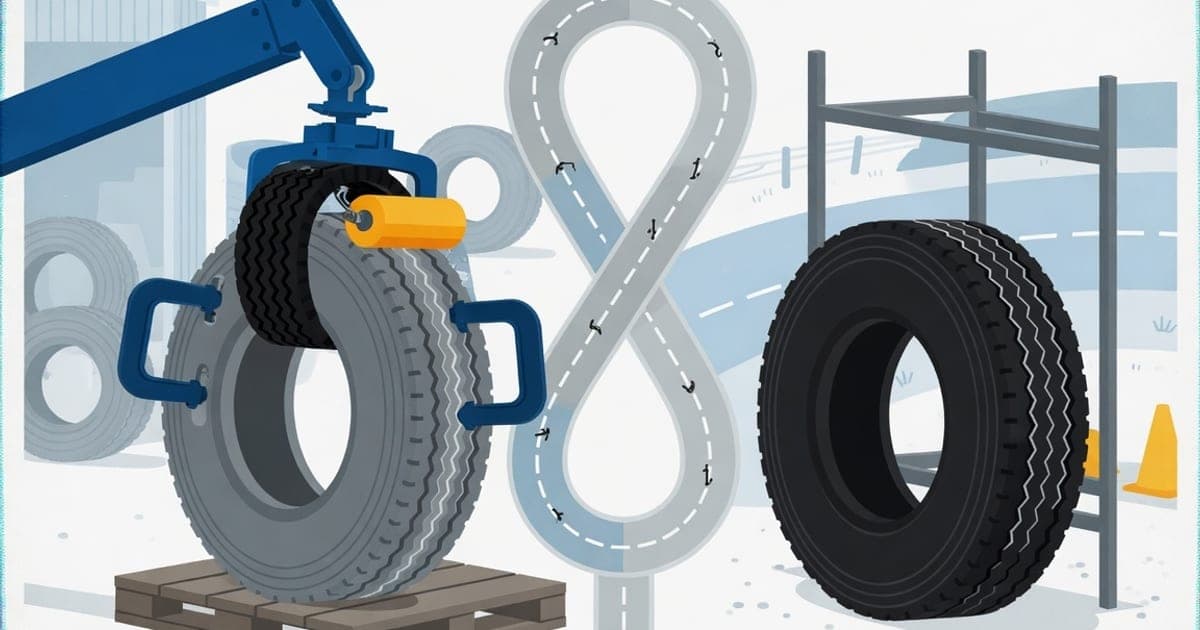
A retread is a worn tyre whose casing, the structural body of steel belts and plies, has been inspected, had its old tread buffed away, and had new tread bonded on, either as pre-cured tread strip or as new rubber cured in a mould. The economics exist because the casing is most of the manufacturing cost of a tyre and wears out much slower than tread does: a quality casing can carry two or even three tread lives if it is looked after.
Retreading in Australia is a standards-based industrial process, not a shed job: the Australian Standard covering tyre retreading and repair processes, AS 1973, is the reference the industry works to, and reputable retreaders operate documented inspection, repair and process control against it. Confirm the current standard edition with Standards Australia if you need to cite it in a procurement document; for a buyer, the practical version is simpler: a retread should carry the retreader's markings and be traceable to a known retreader, and an unmarked retread from nowhere answers its own question.
Casing quality decides everything
Everything about a retread's performance is inherited from the casing. A premium-brand casing that ran its first life at correct pressures, was never run flat, never overloaded and never cooked, retreads into a reliable second life. A casing that was run underinflated has fatigued sidewalls no new tread can fix. This is why the retread industry inspects casings with shearography and rejects a proportion of everything submitted, why premium casings command core value while budget casings are often worth nothing to retread, and why the cheapest new tyres are frequently a false economy: you are buying one tread life with no second act in the casing.
For an operator, the discipline is pressure maintenance and damage reporting during the first life, because that is when the second life is being won or lost.
Where retreads run, and where they do not
The standing pattern across Australian fleets: retreads on drive and trailer positions, new rubber on steers. Drive and trailer positions suit retreads because the failure consequences are more contained (a multi-tyre axle group has redundancy a single-tyre steer position does not) and the duty is torque and load rather than steering precision. Vocational fleets, waste, construction, urban delivery, retread heavily because their tyres die of cuts and scrub long before casing fatigue matters. Linehaul fleets retread drive and trailer positions on managed casing programs.
The steer axle question
Steer positions are where retread policy gets absolute. Restrictions on fitting retreaded tyres to steer axles exist in vehicle standards for certain vehicle classes, with buses the commonly cited case, and beyond the regulatory layer it is near-universal operator practice to run new tyres on the steer axles of heavy trucks regardless of what the rules technically allow. We are deliberately not quoting a legal prohibition and its exact scope here: verify the current vehicle standards position for your vehicle class with NHVR (nhvr.gov.au) or your state authority before writing a tyre policy. What we can state plainly is the practice and the reason for it: the steer positions carry the least redundancy and do the steering, an operator who saves money there has chosen the worst possible place to do it, and any workshop, insurer or investigating authority will read steer-axle retreads on a heavy truck exactly that way.
Cost per kilometre, compared honestly
Ignore percentage-saving claims from anyone selling either product. The only honest comparison is cost per kilometre with your own inputs, all of them labelled. The method, using illustrative numbers you must replace with your own quotes and your own logbook:
| Input | New tyre example | Retread example |
|---|---|---|
| Price paid, plus GST | Your quote, say $700 | Your quote, say $350 on your casing |
| Kilometres delivered in your fleet | Your logbook, say 200,000 | Your logbook, say 140,000 |
| Cost per kilometre | $0.0035 | $0.0025 |
Those kilometre figures are placeholders for the tracking described in our tyre sizes and cost guide, not market data: retread life relative to new varies with application, casing quality and retread process, and your own per-position records are the only version of that number that is true for you. Complete the picture with the second-order terms: a new premium tyre also delivers a retreadable casing at end of life (an asset), a retread consumes one of your casing's limited lives, and fuel economy differs between tread types in ways manufacturers quote and fleets should measure. Then put the result into the whole-of-vehicle arithmetic in our running cost per kilometre guide, where tyres sit alongside fuel and maintenance as the operating costs you can actually manage.
Managing a casing pool
Once a fleet retreads, casings become an asset class. The working rules: buy first-life tyres partly on casing reputation, because retreaders accept and reject by brand and history; tag and track casings by serial so each one's retread count is known; report and repair damage immediately, since a small injury repaired early keeps a casing serviceable; and negotiate with the retreader on casing credits, because your rejected casings and your surplus good ones both have market value. A small operator without the volume for a pool can still play: retreaders and dealers run exchange programs, and surplus casings and takeoff tyres sell steadily through the tyres, wheels and rims listings.
Inspecting retreads on a used truck or trailer
Retreads on a unit you are buying are information, not automatically a defect. Read them like this: retreader markings present and legible is a good sign, a managed fleet buys marked retreads from known suppliers; matched brands and even wear across an axle group says tyre management existed; anonymous, mixed, unevenly worn retreads say the seller bought whatever was cheapest, and you should assume the same philosophy ran the driveline. On trailers especially, count what proportion of the rubber is retread and how much life remains, then price the set against the ranges in the tyre cost guide, and check steer positions on any truck: what is fitted there tells you the operator's whole attitude in one glance.
The honest verdict
Retreads are a rational tool with two failure modes: fitted where they should not be, and bought on price with no casing behind them. Run new on steers, retread drives and trailers on quality casings through a marked, reputable retreader, do the arithmetic in cost per kilometre with your own numbers, and the decision mostly makes itself. When fleet changes leave you with surplus rubber, casings or complete wheel sets, list them free with brand, size, retread markings and DOT dates stated, because the buyers who understand this guide pay properly for rubber they can verify, and walk past listings that hide it.
Retreading standard reference and steer axle restrictions: confirm the current AS 1973 edition with Standards Australia and the vehicle standards position for your vehicle class with NHVR (nhvr.gov.au), checked as described on 6 August 2026.